
Abhijit Chaliha
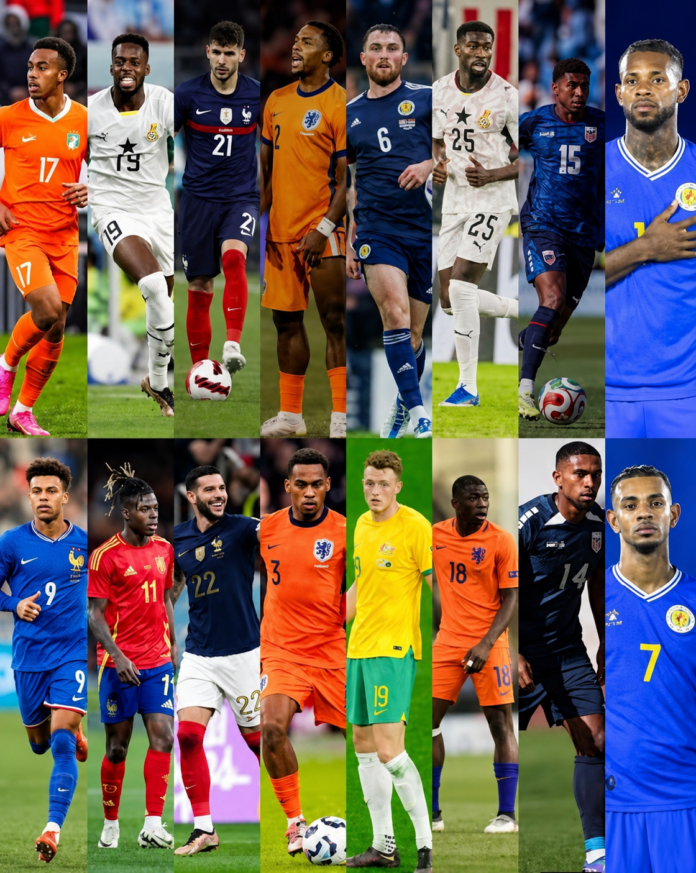
The FIFA World Cup is often described as the greatest sporting spectacle on Earth. It is a tournament of trophies, records, rivalries and national pride. Every four years, billions of people gather around television screens to watch the world’s best footballers compete for glory. Yet beyond the goals, tactics and celebrations lies another side of the World Cup—one that is deeply personal and profoundly human. As the 2026 FIFA World Cup unfolds across the United States, Mexico and Canada, one of its most fascinating narratives is not about teams or titles but about families. This year, several pairs of brothers are participating in the tournament, some representing the same nation and others playing for different countries. Their stories remind us that football is ultimately about people, relationships and shared dreams. For some families, the World Cup is a celebration of a dream achieved together. French brothers Lucas and Theo Hernandez once again find themselves representing their country on football’s biggest stage. Their journey reflects years of sacrifice, dedication and mutual support. The 2022 World Cup brought mixed emotions for the family, as Theo featured in France’s run to the final while Lucas watched from the sidelines due to injury. This year, both brothers have the opportunity to write a new chapter together.
The Netherlands, too, showcases the remarkable story of twins Quinten and Jurrien Timber. Growing up together, training together and eventually representing their country together, they embody the special bond that often exists between siblings. Similarly, Curaçao’s Leandro and Juninho Bacuna have made history by helping their nation reach football’s grandest stage. Their achievement is not merely a sporting success but a source of immense pride for a small country seeking recognition on the global map. However, the most compelling stories are often those where brothers find themselves on opposite sides of the field. Few examples illustrate this better than the Williams brothers. Nico Williams represents Spain, while his elder brother Inaki Williams plays for Ghana. Born in Spain to Ghanaian parents, the two brothers have chosen different international paths, reflecting the complex realities of migration, identity and belonging in the modern world. Their family story is extraordinary. Their parents undertook a perilous journey from Ghana to Spain, crossing vast stretches of the Sahara Desert in search of a better life. Years later, their sons have become international footballers competing at the highest level. One wears the colours of Spain, the nation that offered their family refuge and opportunity. The other proudly represents Ghana, the homeland of their parents and ancestors. Neither choice is more authentic than the other; together, they tell a powerful story about the multiple identities that many people carry in an increasingly interconnected world.
The Doué brothers offer a similar narrative. Guéla Doué represents Ivory Coast, while his younger brother Désiré Doué plays for France. Recently, the two faced each other in an international fixture, creating a moment that transcended competition. When the match ended, they embraced warmly, reminding spectators that family bonds are stronger than sporting rivalries. Then there is the story of Harry and John Souttar. Harry represents Australia, while his elder brother John plays for Scotland. Their relationship has deepened following a recent family tragedy, making their shared World Cup experience particularly meaningful. Despite representing different nations, both brothers have spoken about their pride in simply reaching football’s greatest stage and sharing that journey together. These stories are not new to World Cup history. Football has long celebrated family legacies. England’s Bobby and Jack Charlton became legends after helping their nation win the 1966 World Cup. The Netherlands produced iconic sibling partnerships such as René and Willy van de Kerkhof and later Frank and Ronald de Boer. Italy’s famed Maldini family has extended its footballing influence across generations, from Cesare Maldini to Paolo Maldini and now Daniel Maldini.
Yet the modern World Cup has added new dimensions to these family narratives. Increased migration, globalisation and dual citizenship have created situations where siblings can legitimately choose different national teams. Such decisions are often shaped by personal experiences, opportunities, emotional connections and family histories. Far from dividing families, these choices frequently highlight the richness and diversity of contemporary identities. In an era when discussions about nationality and belonging can become divisive, the stories of these brothers offer a refreshing perspective. They demonstrate that identity is not always a matter of choosing one side over another. It can be layered, complex and inclusive. A player can honour his ancestral roots while embracing the country where he was raised. Families can celebrate multiple cultures and traditions without contradiction. Perhaps that is why these stories resonate so deeply with audiences. They reveal the human side of elite sport. Behind every jersey is a family that has made sacrifices, faced hardships and nurtured dreams. Behind every international star is a child who once played football in a backyard, a local park or a village field with brothers, sisters and friends.
As the World Cup progresses, attention will naturally focus on trophies, statistics and championship contenders. But somewhere during the tournament, a brother may score against his own sibling. Somewhere, parents may find themselves applauding both sides. Somewhere, a family will experience joy and heartbreak simultaneously. Those moments capture the true spirit of football. Long after the final whistle blows and the champions lift the trophy, the stories of these brothers will endure. They remind us that while football may divide teams and nations for ninety minutes, it also possesses a unique power to connect people across borders, cultures and generations. In the end, the World Cup is not only about who wins. It is about the stories that reveal our shared humanity. And among those stories, few are as powerful as brothers chasing the same dream—whether in the same jersey or on opposite sides of the pitch.
