
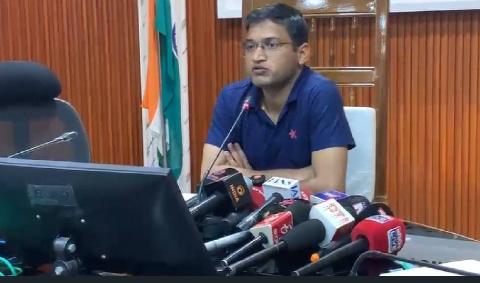
Sivasagar Deputy Commissioner Mridul Yadav on Sunday, July 26, described the recent floods as the worst to hit the district in five decades, with nearly four lakh people across 301 revenue villages affected by extensive damage to life, property and livelihoods.
Addressing a press conference, Yadav said the district administration, in coordination with multiple government agencies, had been working continuously on rescue, relief and rehabilitation operations to restore normalcy across the flood-hit district.
The floods affected villages under three revenue circles, with the Nazira and Sivasagar Assembly constituencies among the worst-hit areas. Thousands of families suffered substantial damage to their homes, agricultural land and sources of livelihood.
The administration has confirmed 30 flood-related deaths, while seven people remain missing. Search operations are continuing in affected areas to locate those unaccounted for.
Yadav said around 20,000 people had been evacuated from inundated villages through coordinated efforts involving the State Disaster Response Force, National Disaster Response Force and local volunteers. The rescue operation deployed 60 SDRF and NDRF boats along with 62 indigenous country boats to evacuate stranded residents and shift them to safer locations and relief camps.
As floodwaters receded, the administration shifted its focus towards restoration work. JCB excavators and Falkland machines were deployed to remove mud, sand and debris, restore road connectivity and facilitate the transportation of relief materials.
More than 50 relief camps and distribution centres were established to shelter displaced families and provide essential supplies. While the first phase of relief distribution has been completed, the second phase is underway to ensure continued assistance to affected residents.
Yadav said distribution of the Chief Minister’s Special “CM Family Kit” would begin shortly. The kits will contain essential household items and daily-use commodities to help flood-affected families resume normal life.
For villages that remained cut off by road, the administration launched aerial relief operations. Nearly 10,000 kilograms of food and essential commodities were airlifted by helicopters and distributed among around 2,000 families stranded in remote areas. Helicopter sorties will continue until road connectivity is restored, the Deputy Commissioner said.
The Health Department has also intensified preventive measures to control the spread of post-flood diseases. Adequate stocks of medicines have been maintained to treat illnesses including diarrhoea, cholera and skin infections.
A total of 38 medical teams have been deployed across more than 200 relief camps and affected areas to provide treatment, conduct health awareness campaigns and monitor water quality.
Although river levels have started to decline, stagnant water and damaged infrastructure continue to hamper restoration efforts in several urban and rural areas.
Yadav said the next two to three days would be critical for the recovery process, with all departments working in coordination to restore essential services and normalcy as soon as possible.
The Deputy Commissioner also urged residents to cooperate with the administration, follow official advisories and avoid entering unsafe flood-affected areas until restoration work is completed.
