
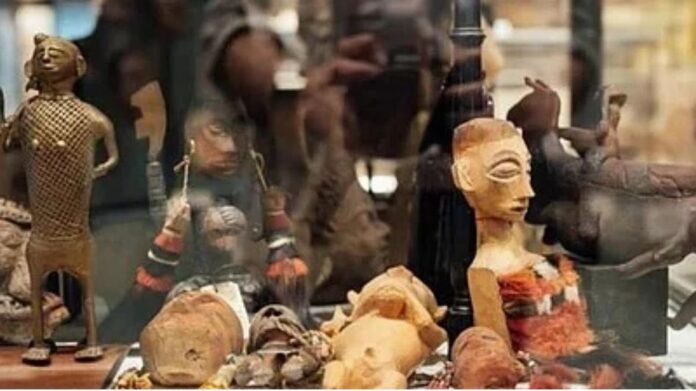
More than 39 sets of Naga ancestral remains, returned from the Pitt Rivers Museum at the University of Oxford in the United Kingdom after being kept there for over a century, will be displayed at Solidarity Park in Nagaland for two to three days before their burial.
Dr Visier Sanyü, a member of the Forum for Naga Reconciliation (FNR), said two programmes — a homecoming ceremony and a burial ceremony — would be organised to mark their return.
Speaking in Dimapur, Sanyü thanked the Naga Students’ Federation (NSF) and the Naga People’s Movement for Human Rights for donating land to serve as the final resting place for the remains. He added that the public would be allowed to pay their respects at Solidarity Park during the two-to-three-day display.
Dr Ellen Konyak Jamir, coordinator of Recover, Restore and Decolonise (RRaD), described the repatriation as an assertion of the Naga people’s right to their ancestral human remains.
She said the process had created an opportunity for the museum and the Naga community to address historical issues through sustained dialogue.
The Pitt Rivers Museum formally handed over the remains to facilitate their return to Nagaland. They were taken from the region during the colonial period more than 100 years ago and subsequently became part of the museum’s collection.
The repatriation followed sustained efforts by Naga organisations and representatives to bring ancestral remains held in overseas museums back to their homeland.
The return holds cultural, historical and emotional significance for the Naga community, providing an opportunity to honour their ancestors through traditional burial rites and restore their dignity.
