
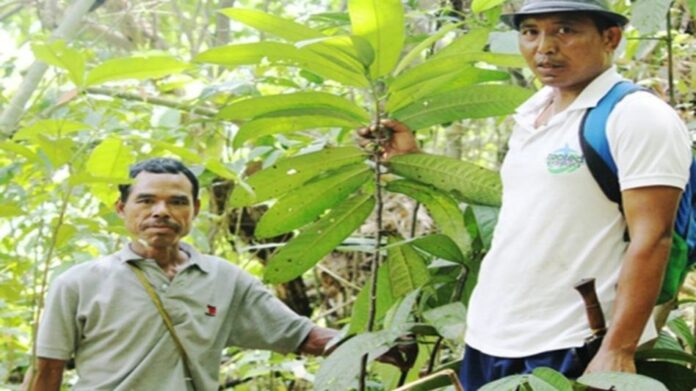
Kohima: In a groundbreaking collaboration, researchers from Nagaland University and Assam Down Town University have completed the first-ever comprehensive scientific study on Goniothalamus simonsii—an endangered and endemic medicinal plant found in the forests of Meghalaya.
The research, published in the peer-reviewed journal Chemistry and Biodiversity, reveals the plant’s remarkable pharmacological potential, combining indigenous wisdom with cutting-edge biomedical science.
According to Dr. Mayur Mausoom Phukan, Assistant Professor in the Department of Forestry at Nagaland University, the study arrives at a critical juncture when global healthcare systems are battling antibiotic resistance and the harmful effects of synthetic drugs. “Our findings reaffirm that India’s biodiversity holds immense potential for modern drug discovery,” Phukan said. “Goniothalamus simonsii not only shows significant pharmacological promise but also underscores the need to conserve such rare species.”
Traditionally used by indigenous communities to treat ailments like typhoid, malaria, throat irritation, and gastrointestinal disorders, G. simonsii had never been scientifically studied before. The new research confirms that the plant contains diverse bioactive phytochemicals with potent antioxidant, antimicrobial, and anticancer properties.
Using advanced analytical tools and computational modelling, the team demonstrated how natural compounds from the plant interact with cancer-related proteins—offering potential pathways for developing new, nature-based therapeutic drugs.
Nagaland University Vice Chancellor Jagadish K. Patnaik praised the collaborative effort, saying, “This research not only enhances our understanding of a rare species but also bridges the gap between traditional knowledge and modern science.”
The study identified several bioactive compounds with antioxidant, anti-inflammatory, antidiabetic, antimicrobial, and anticancer activities. Notably, extracts from different parts of the plant showed strong anti-proliferative effects against colon cancer cells in laboratory tests, highlighting its potential as a natural source for anticancer drug development.
Research scholar Samson Rosly Sangma from Nagaland University’s Department of Forestry emphasised the conservation aspect of the work. “Goniothalamus simonsii is now confined to only a few natural habitats, and its population has declined sharply due to limited awareness of its medicinal value,” he said. “Listed as ‘Endangered’ by the IUCN, the species requires immediate conservation efforts. We hope our findings will encourage sustainable cultivation and protection.”
The study marks a major step toward integrating biodiversity conservation with drug discovery, strengthening the case for preserving India’s rich repository of traditional medicinal plants for future generations.
