
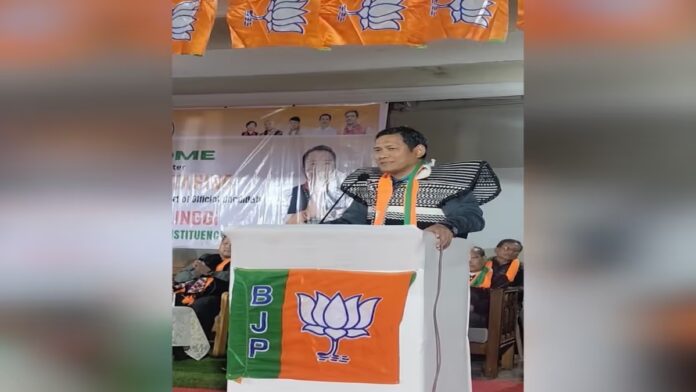
A significant political controversy has erupted in Arunachal Pradesh following a highly criticized statement allegedly made by Panchayat, Transport, and Rural Development Minister Ojing Tasing during an election campaign in Lower Dibang Valley district. The alleged remarks, which have drawn widespread condemnation, occurred as the state prepares for Panchayat and Municipal elections scheduled for December 15, a period when the Model Code of Conduct (MCC) is actively enforced. Critics contend the Minister’s actions are a blatant disregard for the democratic process.
While on the campaign trail supporting BJP Zilla Parishad Candidate Gunu Linggi, Minister Tasing reportedly issued a public threat to voters, suggesting a conditional approach to development. He is alleged to have declared, “Government schemes will not be implemented in those villages and segments where the BJP candidate loses the election, and I, being the Panchayat Minister, am giving this statement to ensure it will happen.” This proclamation immediately triggered backlash, with accusations that the Minister was weaponising public welfare and development programmes to manipulate the electorate.
The controversial statement is seen as striking directly at the fundamental principle of the Model Code of Conduct, which is designed to guarantee a level playing field by preventing the ruling party from misusing public resources or policy decisions to sway voters. The Minister—who also represents the Boleng-Pangin Assembly constituency in East Siang—is perceived to have shown open contempt for institutional norms and defied the mandate of the State Election Commission by making such a threatening declaration during an active election cycle. The incident has raised serious concerns regarding the integrity of the ongoing local body elections and the commitment of the current government to ethical democratic practices. As polling day rapidly approaches, there are intensifying calls for the State Election Commission to officially acknowledge the violation and take appropriate, decisive action to preserve the sanctity of the electoral process.
