
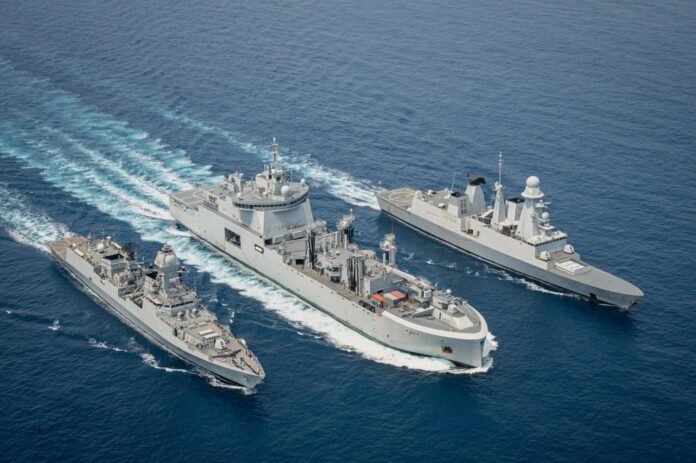
India marks Navy Day annually on December 4, a national observance dedicated to honoring the bravery, accomplishments, and vital contributions of its naval forces. This specific date was chosen to commemorate Operation Trident, a pivotal naval offensive that took place during the 1971 India-Pakistan war. The commemoration sees naval bases and military establishments nationwide hosting parades and live demonstrations of the Navy’s advanced maritime capabilities, allowing citizens to witness the strength of the Indian Navy. These significant events are typically attended by senior officials from the armed forces.
This year’s centerpiece celebration features a spectacular Operational Demonstration staged at Shangumugham Beach in Thiruvananthapuram, Kerala. The showcase aims to highlight the Navy’s cutting-edge operational platforms and reinforce its position as the “Preferred Security Partner” across the Indian Ocean Region, aligning with the broader MAHASAGAR initiative. This demonstration will involve coordinated maneuvers by frontline naval assets, serving to illustrate India’s capacity for delivering both power and precision across the entire maritime domain. The event distinctly underscores the Navy’s commitment to protecting national interests and bolstering overall maritime security.
As the country celebrates the modern Indian Navy, attention is also drawn to Chhatrapati Shivaji Maharaj, who is revered as the Father of the Indian Navy. The legendary Maratha king laid the groundwork for India’s maritime power in the 17th century through his visionary strategies and significant naval accomplishments. Recognizing the coastline’s crucial strategic importance, Shivaji established a formidable naval force. This fleet was designed to secure trade routes, safeguard essential exports, and effectively counter the naval presence of European powers, including the Portuguese, Dutch, and British.
Shivaji Maharaj’s lasting contributions encompass the construction of heavily fortified sea forts, such as Sindhudurg, Vijaydurg, and Suvarnadurg. He was also responsible for developing a fleet of agile ships particularly well-suited for coastal waters and pioneering innovative naval tactics, including a form of guerrilla warfare adapted for the sea. These initiatives were instrumental in strengthening India’s maritime defenses and simultaneously ensuring economic security through the essential protection of trade. Through his profound foresight and robust maritime strategy, Chhatrapati Shivaji Maharaj successfully created a sturdy naval framework, which earned him the title of the Father of the Indian Navy. His enduring legacy continues to serve as an inspiration to the modern Indian Navy, symbolizing the nation’s rich maritime heritage and the unwavering spirit of India’s naval forces.
