
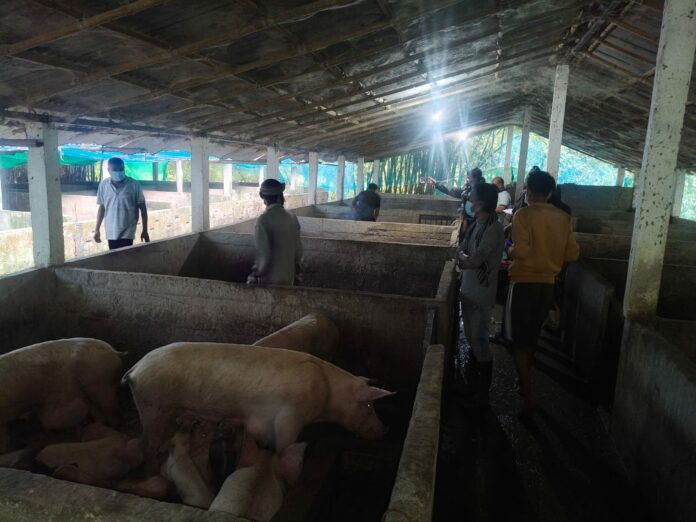
Sivasagar: The recent outbreak of African Swine Fever (ASF) across 30 districts of Assam has caused widespread concern among the state’s pig farming community, threatening a vital source of livelihood for thousands of families. The highly contagious viral disease, reportedly introduced through pigs brought in from outside the state, has disrupted the local pig market and raised serious questions about biosecurity and disease control measures.
Pig farming plays a crucial role in Assam’s rural economy, particularly in the northeastern region where pork is a major dietary staple. With ASF spreading rapidly, farmers have suffered heavy losses due to large-scale pig mortality and movement restrictions, pushing many small and marginal farmers into financial distress.
Amid the crisis, sections of the local population have voiced apprehensions, alleging that the outbreak may benefit large corporate players at the cost of local farmers. They have pointed out that pig imports from outside the state are reportedly continuing despite the outbreak, leading to suspicions about regulatory oversight. Some locals have drawn parallels with earlier bird flu outbreaks that severely affected the poultry sector, claiming that inadequate support at the time forced many small farmers out of business.
Also Read: Two Bangladeshi Hindus Granted Indian Citizenship Under CAA in Assam
Farmers’ groups and community leaders are now demanding clear answers from the government on containment measures, regulation of pig imports and compensation for affected farmers. They have also called for a thorough and transparent investigation into the spread of ASF and stronger support mechanisms to protect the local pig farming community.
State authorities, meanwhile, have maintained that steps are being taken to control the disease and prevent further spread, while urging farmers to follow prescribed safety protocols.
