
Guwahati, Jan 3: Security agencies have dismantled a radicalisation and indoctrination network operating across parts of Assam and Tripura, with links traced to a Bangladesh-based extremist organisation, leading to the arrest of 11 individuals from multiple districts. Investigators said the group was actively spreading extremist ideology online by misusing religious narratives and promoting the concept of “Ghazwatul Hind.”
According to officials, the probe revealed that the network began taking shape in late 2024 after Nasim Uddin, also known as Tamim, a resident of Nichuka in Barpeta Road, encountered radical content on YouTube. The video discussed the idea of a “Muzaddid,” a figure believed in Islam to emerge every century to protect the faith. In the comment section, Nasim Uddin interacted with a user claiming to be from Bangladesh and identifying himself as Khalid, who asserted that a Muzaddid named Imam Mahmud had already appeared.
Investigators said Nasim Uddin was subsequently directed to a Telegram account operated under the name Khalid. Through this channel, he received religious literature and so-called divine messages in PDF form. Acting on instructions from handlers based in Bangladesh — identified as Umar, Sujan Bin Sultan and Shamim Barah — along with Mir Rahman of West Bengal and Jagir Miah of Agartala, Khalid allegedly used distorted interpretations of religious texts to claim that scriptures foretold the arrival of Imam Mahmud and justified armed conflict.
The Telegram group “Purva Akash” was later created to expand the network, with Khalid initially serving as administrator before handing over control to Nasim Uddin. Several individuals from Assam and Tripura were added to the group, where messages advocating “Ghazwatul E Hind” were circulated. Khalid also cited various books, claiming they contained Hadish supporting a call for war against Hindustan. However, scrutiny by investigators found that the cited references were fabricated and did not exist in the original texts.
Further investigation established that the material originated from Imam Mahamuder Kafila (IMK), a Bangladesh-based extremist group and an offshoot of Jamaat-ul-Mujahideen Bangladesh (JMB). IMK was founded in 2018 by Jewel Mahmud, also known as Imam Mahmud Habibullah, a former JMB cadre who claims leadership of the outfit. Authorities said the group promotes violent ideology aimed at establishing Muslim rule in India through attacks against Hindus.
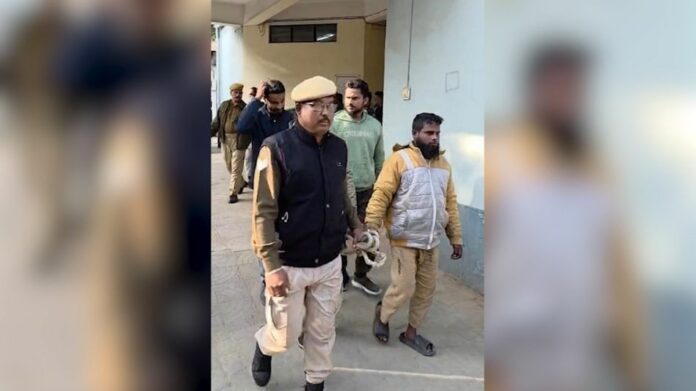
In connection with the case, police arrested individuals from Chirang, Baksa, Barpeta and Darrang districts of Assam, along with one accused from Agartala in Tripura. Those arrested include Nasim Uddin alias Tamim and others identified as active participants in the network. Officials said the accused were produced before the court, and during interrogation, they allegedly admitted to their roles as outlined in the FIR.
The probe also revealed that members of the network had begun collecting funds in parts of Barpeta, Chirang and other lower Assam districts to support IMK’s activities. Authorities found that some mosques used for indoctrination contained material advocating armed struggle against the Indian state. Investigators said the overarching aim of the group was to incite violence, fuel communal unrest and push extremist agendas under the guise of religion.
Security agencies further disclosed that Nasim Uddin and the arrested individual from Tripura had travelled to Bangladesh between April and May 2024, where they allegedly attended meetings and training sessions linked to extremist operations. Officials confirmed that investigations are continuing in phases to uncover additional operatives, funding routes and cross-border connections associated with the network.
