
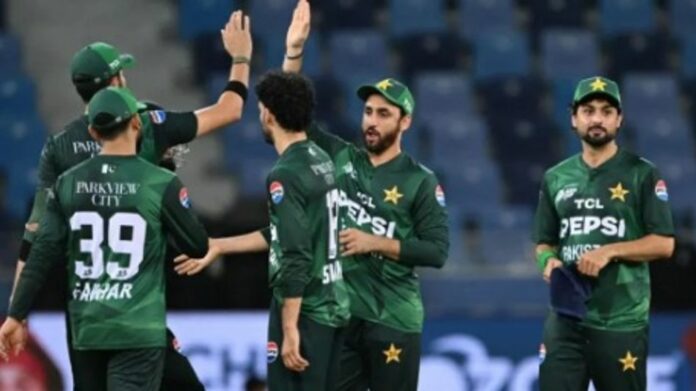
Sports, Feb 2: Pakistan on February 1 announced that its men’s cricket team will not play the high-voltage group-stage match against India in the ICC Men’s T20 World Cup 2026, even as the government gave formal clearance for participation in the remainder of the tournament, scheduled to begin on February 7.
In an official statement shared on social media, the Pakistan government confirmed that it had approved the national side’s involvement in the ICC event but specified that the team would not take the field for the February 15 fixture against India, which is slated to be held in Colombo. The decision has been widely interpreted as a political signal linked to Bangladesh’s exclusion from the tournament after the ICC rejected its request to relocate matches from India to Sri Lanka on security grounds. Bangladesh was subsequently replaced by Scotland, a move that drew criticism from both political and cricketing quarters in Pakistan.
The International Cricket Council expressed concern over Pakistan’s stance, cautioning that a boycott of the marquee fixture could lead to disciplinary action. In a statement, the ICC said it hoped the Pakistan Cricket Board would reflect on the long-term consequences for cricket in the country, noting that such a decision could disrupt the global cricketing ecosystem. While acknowledging the role of governments in national policy matters, the ICC stressed that the move was not in the broader interests of the sport or its global fanbase, including supporters within Pakistan.
Earlier, the Pakistan Cricket Board had indicated that it was reviewing its participation in the World Cup as a gesture of solidarity with Bangladesh. However, the latest announcement clarified that Pakistan would proceed with the tournament, excluding only the match against India.
The India–Pakistan encounter is traditionally the most-watched fixture in ICC events, commanding massive global audiences and significant commercial value. A walkover in India’s favour could translate into major revenue losses for broadcasters, with advertising earnings for the match estimated at between Rs 200 crore and Rs 250 crore. Under ICC rules, a walkover is granted if one team fails to appear for the toss. India is expected to travel to Sri Lanka for the scheduled game, and if Pakistan captain Salman Ali Agha does not present himself for the toss, the match referee would award India two points.
Beyond the immediate sporting impact, the ICC retains the option of imposing fines on the PCB. Other potential repercussions include restrictions affecting Pakistan’s future participation in ICC tournaments, possible ranking implications, reduced willingness of international teams to tour Pakistan, and even constraints on player involvement in the Pakistan Super League.
Pakistan are set to begin their World Cup campaign against the Netherlands on February 7, followed by matches against the United States on February 10 and Namibia on February 18, with all fixtures scheduled at the SSC ground in Colombo. A source familiar with developments within the PCB said chairman Mohsin Naqvi is expected to address the media soon, adding that questions remain over whether the decision to skip the India match was taken solely by the government or in consultation with the cricket board.
Neither the PCB nor the government has clarified how a similar situation would be handled if India and Pakistan were to be drawn together in the knockout stages. India–Pakistan contests in ICC and Asia Cup tournaments remain among the biggest revenue drivers for world cricket, with the two sides meeting three times during last year’s Asia Cup in the UAE.
