
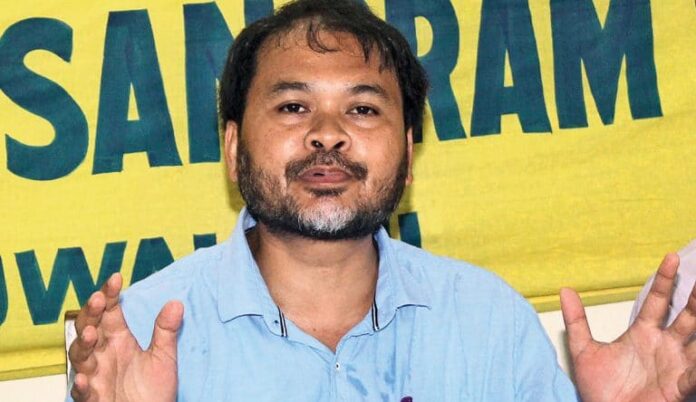
Sivasagar MLA Akhil Gogoi on December 12 cast serious doubts on the credibility of the chargesheet filed in connection with the death of renowned Assamese singer Zubeen Garg, alleging that the investigation was driven by political considerations rather than a genuine pursuit of truth.
Addressing the media, the Raijor Dal legislator claimed that for the past 84 days the Assam government, led by Chief Minister Himanta Biswa Sarma, had focused on shaping a narrative to suit political interests instead of addressing public concerns surrounding the case. Gogoi asserted that the chargesheet submitted by the Assam CID did not conclusively establish Garg’s death as a case of murder, despite widespread public speculation and repeated assurances from the government.
Raising procedural objections, Gogoi questioned how the investigating officer could prepare a chargesheet without travelling to Singapore, where the incident occurred. He described the document as politically motivated, remarking that it resembled an “election manifesto” rather than a legally sound chargesheet grounded in on-site investigation.
The MLA further alleged that the urgency in filing the chargesheet was linked to electoral calculations, claiming it was aimed at preventing a repeat of political backlash similar to what the BJP faced during the anti-CAA movement. He argued that the government wanted to ensure that party workers would not face resistance in villages during the upcoming elections.
Referring to legal precedents, Gogoi said he had consistently pointed to the Madras High Court verdict in the Jayalalithaa case, which underscored the need for international procedures when incidents occur outside India. He claimed such requirements were ignored in the present investigation.
Dismissing official claims that thousands of documents and statements were collected, Gogoi said the exercise was meaningless without proper ground verification. He alleged that investigators had not even examined the water body where Garg was said to have drowned, yet proceeded to file the chargesheet. He also criticised the government for suggesting a motive without clearly explaining how the alleged murder was carried out.
Questioning the Chief Minister’s statement that the matter now rests with the judiciary, Gogoi argued that justice would be difficult if the foundation of the case itself was flawed. Drawing parallels with past political movements, he concluded that the timing and manner of the chargesheet’s filing were strategically calculated rather than legally robust.
