
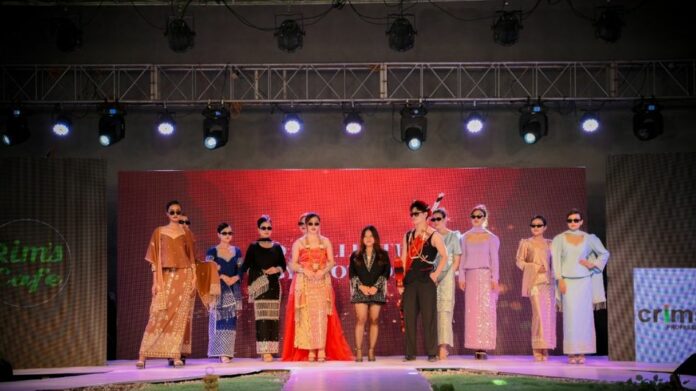
Itanagar, March 15: Arunachal Fashion Week 2026 opened at Interior Park in Naharlagun, launching an eight-day showcase of indigenous textiles and contemporary design from March 14 to 21.
The event, now in its fifth year under the Artisans’ Movement, highlights the state’s silk industry, which produces nearly 69 metric tonnes of Eri silk, Muga silk and Mulberry silk annually and supports the livelihoods of more than 34,000 people across 500 sericulture villages.
The opening programme, titled “AFW Night of Opulence”, was organised by the Department of Textile and Handicrafts. Chief Minister Pema Khandu unveiled a textile installation blending tribal weaving traditions with modern design aesthetics.
Addressing the gathering, Khandu emphasised the cultural significance of traditional weaving practices and the role of platforms like the fashion week in promoting them globally.
“For centuries, our mothers and grandmothers have been the custodians of this remarkable heritage, and today platforms like Arunachal Fashion Week are giving these traditions a modern platform and a global voice,” he said.
The Chief Minister also announced five new sericulture projects worth ₹25 crore, including a skill development programme aimed at training young silk weavers. He further revealed plans to establish an Arunachal Creative Economy Cell within the Chief Minister’s Office to connect artists and artisans with national and international markets.
Women’s groups have played a significant role in the sector, with the state rural livelihoods mission mobilising nearly 1.5 lakh women into around 16,000 self-help groups engaged in weaving and handicrafts.
The runway presentations featured collections by designers including Mibi Bagra, Mobang Darang and Zenith Khonjuju, who showcased designs blending traditional fabrics with contemporary styles. A special weaver presentation by Jiyi Ete and several brand showcases also featured during the opening evening.
Nyali Ete said the event is helping build a structured market for local textile products by encouraging innovation and quality improvement.
Meanwhile, Meena Noshi recalled the initiative’s early beginnings in villages across the Northeast, while Yana Ngoba Chakpu highlighted the platform’s growth since 2015 as a hub for artisans and young creatives.
The inaugural evening concluded with a tribal dinner and interactive discussions involving more than 23 designers, 50 models and several weavers.
A design exhibition is being held alongside the fashion week, showcasing handlooms, jewellery, home décor and traditional crafts. The programme will continue with additional runway shows, performances and exhibitions before concluding on March 21 with awards and a cultural heritage day.
