
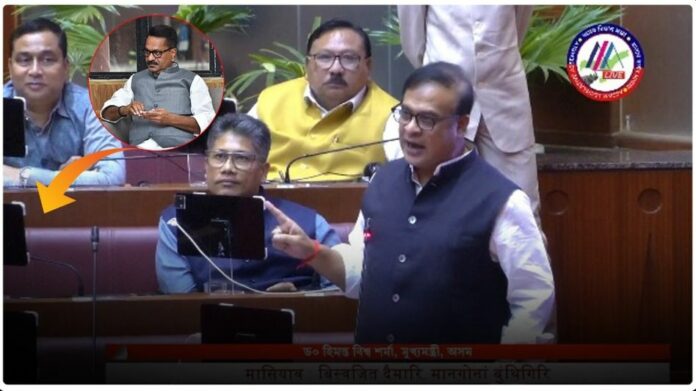
The Assam Assembly’s winter session, held from 25 to 29 November, saw intense debates on some of the state’s most charged political and social issues—including the Polygamy Prohibition Bill, the proposal to grant Scheduled Tribe status to six communities, and the tabling of the long-awaited Tiwari Commission Report on the 1983 Nellie Massacre. It was a session that demanded complete participation from the state leadership. Yet one key minister remained notably absent.
Ashok Singhal, one of Chief Minister Himanta Biswa Sarma’s closest confidants and typically seated directly behind him in the House, did not attend a single day of the session. His unexplained absence stood out even more as the rest of the cabinet engaged in heated discussions and responded to critical questions raised by the Opposition.
Singhal holds two significant portfolios—Health & Family Welfare and Irrigation. A range of crucial questions relating to these departments featured in the House proceedings, but responses had to be provided by another minister in his place. While such delegation is permitted in exceptional circumstances, Singhal’s absence prompted growing speculation over whether any such emergency existed.
Instead, Singhal spent the past eight days participating in the Ati Rudra Mahayagna at Sri Sri Gupteswar Devalaya in Singri, Dharma Nagri Dhekiajuli. His official X timeline reflected continuous updates from the religious event, indicating his full engagement in the ceremony at a time when the Assembly was deliberating on matters of major public concern.
His absence took on deeper political significance given that the session was expected to address issues surrounding the death of iconic artist Zubeen Garg, including allegations about land near “Zubeen Kshetra” and purported links to Singhal’s family. Although the subject did not surface formally in the House, opposition leaders, particularly Raijor Dal MLA Akhil Gogoi, raised sharp accusations before the media.
Gogoi alleged that Singhal had “grabbed 29 bighas of non-cadastral land” around Zubeen Garg’s burial site and accused him of misleading local tribal residents in an attempt to register land that “can never be legally mutated.” He warned that the minister would not be allowed to “take even a single katha of land in Zubeen Kshetra,” branding Singhal “a baniya outsider trying to cheat the people of Assam.”
The contrast grew sharper when Chief Minister Himanta Biswa Sarma, despite leading the government’s engagements in the Assembly and steering major legislative discussions, still made time to visit the same rituals at Singri. While the Chief Minister balanced legislative duties with religious participation, Singhal appeared to prioritise only the latter.
As the winter session concluded with one of the cabinet’s most visible ministers absent throughout, questions now intensify for the government. At a time when the Assembly was tackling some of Assam’s most sensitive issues, why did Ashok Singhal choose to stay away—and was religious devotion the sole reason?
