
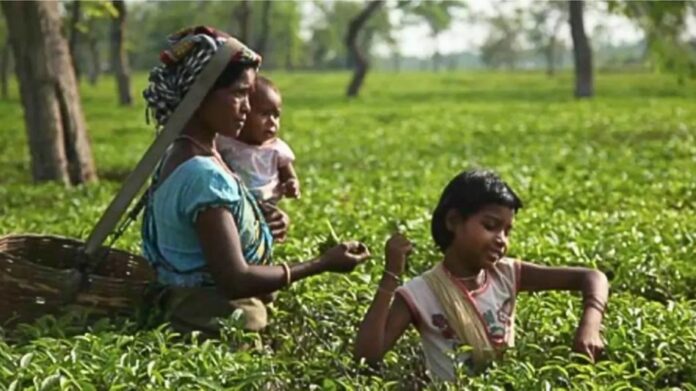
The Assam government has officially eased its two-child policy for several indigenous and marginalised communities, allowing members of Scheduled Tribes, Scheduled Castes, tea garden workers, and the Moran and Matak groups to have up to three children without forfeiting access to key government benefits or opportunities. The revised provision, announced on 5 December, ensures that individuals from these groups will remain eligible for government jobs, electoral participation and Self Help Group incentives even if they have three children.
The Health and Family Welfare Department issued a notification confirming that the amendment to the Population and Women Empowerment Policy of Assam, 2017 has come into immediate effect. Commissioner and Secretary Patibandla Ashok Babu clarified in the order that the relaxation aligns with the state’s recent Cabinet decision on 23 October, which exempted these communities from the previously enforced two-child norm.
Chief Minister Himanta Biswa Sarma had earlier warned that a strict population cap could endanger the demographic continuity of these groups, stating that maintaining the limit might risk their extinction within fifty years. The revised policy, he said, aims to safeguard their cultural and social identity by ensuring their population growth remains sustainable.
Assam’s two-child policy was first introduced in January 2021 as part of the Assam Public Services (Application of Small Family Norms) Rules, 2019, which barred individuals with more than two children from eligibility for direct government recruitment. It was later extended to gaon panchayat elections through a 2018 amendment to the Assam Panchayat Act, which also introduced minimum educational and sanitation-related conditions for candidates.
While the BJP-led government continues to support population-control measures across the state, the latest exemption marks a significant shift, offering relief to communities it classifies as vulnerable and at risk of demographic decline.
