
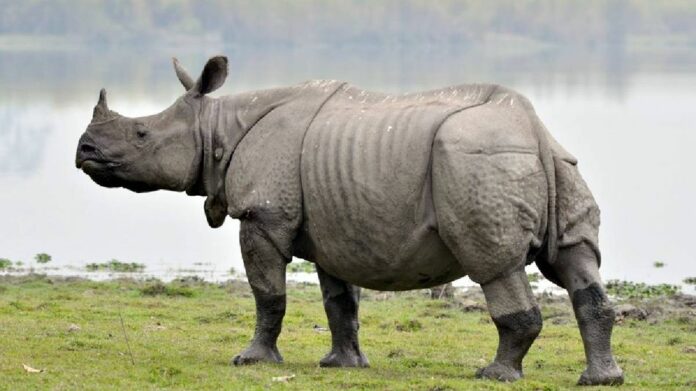
Assam recorded zero known rhino poaching incidents in 2025, marking only the second such year for the state since the 1970s, according to the International Rhino Foundation’s (IRF) 2026 State of the Rhino report.
Assam, home to nearly 80 per cent of the world’s greater one-horned rhinoceros population, had previously recorded zero known rhino poaching in 2022. The state has an estimated 3,260 greater one-horned rhinos, making it the species’ largest global stronghold.
Kaziranga National Park accounts for more than 2,600 rhinos, while Manas National Park is home to around 40-50. Assam had faced years of severe rhino poaching during the mid-2010s, when nearly 30 rhinos were killed in a single year.
The IRF attributed the reversal to stronger intelligence gathering, coordinated enforcement, improved surveillance and greater vigilance by frontline forest personnel and local communities. Assam and Nepal both recorded zero known poaching of greater one-horned rhinos in 2025. Nepal has achieved the milestone 10 times since 2011.
The conservation gains came as the global greater one-horned rhino population continued to recover gradually. The latest International Union for Conservation of Nature (IUCN) estimate puts the global population at around 4,075, up from 4,014 in 2022. Despite the increase, the species remains classified as vulnerable, with habitat degradation, invasive vegetation and poaching continuing to pose threats.
For Assam, the conservation challenge has increasingly shifted towards ensuring that the growing rhino population has sufficient and healthy habitat. Kaziranga remains at the centre of the state’s rhino conservation efforts, while Manas has emerged as an important example of translocation and rewilding.
Between 2006 and 2021, 22 greater one-horned rhinos were translocated to Manas from other parts of Assam, while 20 orphaned or injured rhinos were subsequently rewilded. The population has since begun breeding, indicating progress towards establishing a self-sustaining population.
The IRF cautioned that habitat quality would determine whether such population growth could be sustained. Conservation groups in Manas have been working to maintain water sources and remove invasive plants from degraded grasslands.
The report stressed that expanding the geographical range of rhinos alone would not ensure successful conservation. New habitats need adequate food and water, ecological resilience and sufficient protection from poaching and human-wildlife conflict.
Assam’s progress in controlling poaching has been supported by protection measures, intelligence-led enforcement, technology, ranger training and community participation. However, habitat fragmentation, invasive species, water shortages and expanding human activity continue to pose challenges to rhino population growth.
The milestone therefore marked a shift in Assam’s conservation challenge from preventing rhino deaths to ensuring that the state’s landscapes could sustainably support a growing population.
