
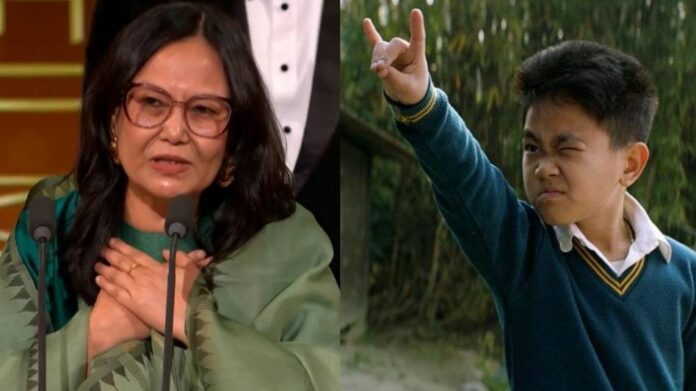
GUWAHATI, Feb 28: The British Academy of Film and Television Arts (BAFTA) is under growing scrutiny after deleting the acceptance speech of Manipuri filmmaker Lakshmipriya Devi from its official social media accounts, just days after her film made history at the prestigious awards. The move has sparked widespread criticism, with artists, activists and social media users accusing the institution of “cultural erasure” and calling for the video to be restored.
On February 22, Lakshmipriya’s Manipuri-language film Boong achieved a landmark victory at the BAFTA Awards, becoming the first Indian film to win in the Best Children’s & Family Film category. The achievement was hailed as a defining moment for Indian regional cinema and celebrated extensively across the country, particularly in Manipur, where it was viewed as a powerful recognition of indigenous storytelling and creative resilience. However, the triumph has since been clouded by controversy.
Within days of the win, BAFTA removed the director’s acceptance speech from its official handles on X and Instagram without issuing any public explanation. The address had drawn significant attention for its emotional depth and its reference to the prolonged ethnic violence in Manipur. In her speech, Lakshmipriya described the state as “very troubled, ignored and very under-represented in India,” highlighting a conflict that has claimed more than 260 lives and displaced tens of thousands since 2023. She dedicated the award to the people of Manipur and expressed hope that internally displaced children, including the young actors in her film, would “regain their joy, their innocence, and their dreams once again.”
The deletion has triggered strong reactions online, with many questioning the rationale behind the decision. Critics argue that the move undermines the voices of marginalised communities on a global platform that publicly champions diversity and inclusion. Civil society figures have joined the chorus of concern, demanding transparency and accountability from the awards body.
Among those who publicly challenged the action was social activist Binalakshmi Nepram. In a post on X, she asked whether BAFTA had removed the speech of an Indigenous woman director from Manipur and asserted that such an act would amount to the erasure of Indigenous and women’s voices. She called for the immediate reinstatement of the video, emphasising that inclusion, not silence, should define global cultural platforms.
As the debate intensifies, BAFTA has yet to provide a formal clarification regarding the removal. What was meant to be a historic milestone for Indian cinema has now evolved into a wider conversation about representation, freedom of expression and the responsibilities of international cultural institutions in amplifying diverse voices rather than muting them.
