
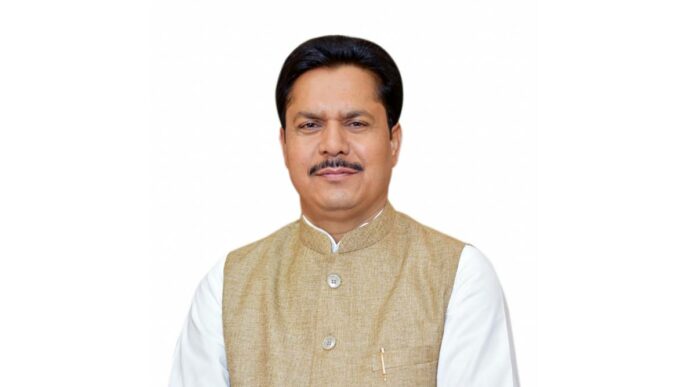
Fresh signs of internal strain emerged within the Indian National Congress on February 17 after former Assam Pradesh Congress Committee (APCC) president Bhupen Kumar Borah said he was willing to withdraw his resignation, subject to assurances from two senior state leaders about the functioning of the party unit.
Borah, who submitted his resignation to Congress president Mallikarjun Kharge on Monday, stated that his decision now depends on whether MP Pradyut Bordoloi and Leader of Opposition Debabrata Saikia are satisfied that the APCC is operating in its “true spirit”.
“I authorised Pradyut Bordoloi and Debabrata Saikia that if these two leaders are convinced that Bhupen Kumar Borah is wrong, and yes, in the future it will never happen, then I will withdraw my resignation,” Borah said.
He added that several party leaders had reached out to him following his announcement. “This morning, Pradyut Bordoloi called me. I will wait the entire day, and if Pradyut Bordoloi and Debabrata Saikia can convince me that yes, this is the Assam Pradesh Congress Committee, then I’m ready to withdraw my resignation,” he said.
Raising concerns about the organisational functioning of the state unit months ahead of the Assembly elections, Borah remarked, “This is not APCC, this is now APCC (R). So I am not ready to work in APCC (R). At present, this is not APCC as per my knowledge and conscience.”
Drawing comparisons with regional political parties, he further commented, “This is APCC like AGP, NCP, TMC. This is APCC within the bracket R. You go and analyse.”
The developments followed Borah’s brief resignation episode on Monday. Jitendra Singh, the All India Congress Committee’s state in-charge, said that although Borah had tendered his resignation, he withdrew it within hours and it was not accepted by the party leadership.
Jorhat MP Gaurav Gogoi, who also met Borah, described him as a “strong Congress leader” and an “asset” to the party, signalling attempts to defuse tensions within the Assam Congress.
The episode highlights continuing friction within the state unit at a critical juncture, with organisational cohesion emerging as a key challenge ahead of the forthcoming Assembly elections.
