
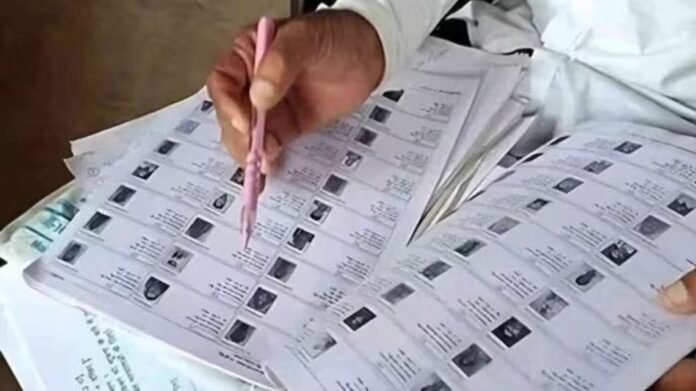
Gangtok, Feb 20: The Election Commission of India has announced that the Special Intensive Revision (SIR) of electoral rolls will commence in April 2026. In a letter dated February 19, 2026, the Commission informed Chief Electoral Officers of 22 states and Union Territories, including Sikkim, about the next phase of the nationwide revision.
The Commission had ordered the SIR in June 2025 with the objective of cleaning up voter lists by removing duplicate, fake and ineligible entries while ensuring that no eligible Indian citizen is excluded. In a small state like Sikkim, with a population of around 6.7 lakh and approximately 4.5 lakh voters, even minor alterations in the electoral roll can have a significant impact on the political landscape.
Preparations are already under way in the state. On February 17, officials conducted a review meeting at the Chief Electoral Officer’s office in Gangtok and reported that door-to-door mapping had reached 77 per cent completion. Representatives of political parties were informed that voters who had already been verified would not undergo fresh checks. However, individuals flagged during verification would be required to submit one of 11 alternative documents. Authorities clarified that Aadhaar would be accepted only as proof of identity and not as proof of citizenship or residence.
The issue of electoral rolls has long remained sensitive in Sikkim. The rolls were digitised in 2002, marking a major administrative shift in election management.
Chief Minister Prem Singh Tamang, who leads the Sikkim Krantikari Morcha, has not publicly reacted to the latest announcement. His government maintains an alliance with the Bharatiya Janata Party at the Centre while continuing to safeguard Sikkim’s special constitutional status under Article 371F. A key issue under discussion is whether the Certificate of Identification (COI), issued to old settlers of Sikkim, will be required during verification. The COI holds particular significance for protecting the rights of indigenous Lepcha, Bhutia and Nepali communities.
The Commission has directed states to expedite preparations, as the SIR marks the final phase of a nationwide drive that began in Bihar ahead of its 2025 Assembly elections and later extended to 12 states in October. The current phase will cover the remaining 40 crore electors. In neighbouring Assam, a special revision concluded on February 10, during which authorities removed over 2.43 lakh names from the rolls.
Opposition parties in several parts of the country have criticised the SIR, alleging it could lead to voter suppression. The Supreme Court of India recently allowed the process to continue in West Bengal but directed authorities to ensure fairness.
In Sikkim, officials will face logistical challenges in reaching remote villages, particularly in the North and East districts. As April 2026 approaches, political parties are closely monitoring the process. In a small state, even marginal changes to the voter list can influence the outcome of future elections, placing both administrative efficiency and public trust under scrutiny.
