
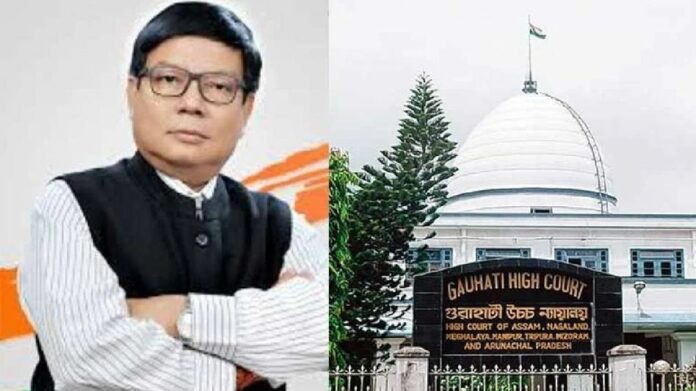
GUWAHATI: The Gauhati High Court has admitted a Public Interest Litigation (PIL) filed by former Leader of the Opposition and former Nazira MLA Debabrata Saikia concerning the devastating floods in Upper Assam in July 2026.
The court directed the Assam and Nagaland governments and other concerned authorities to file detailed affidavits by November 3, 2026.
During the hearing, the Chief Justice observed that the concerns raised by Saikia were genuine and noted his long-standing communication with the court and government officials over alleged illegal mining and issues concerning the Dikhow river.
The PIL seeks judicial scrutiny of factors that allegedly contributed to the floods, including illegal mining in the Dikhow riverbed, activities in Nagaland’s catchment areas and water releases from upstream dams.
Saikia alleged that the floods, which claimed more than 80 lives and affected lakhs of people across Sivasagar, Charaideo, Jorhat and Golaghat districts, were aggravated by administrative inaction despite earlier warnings and court directions.
He referred to PILs filed before the High Court in 2018 and 2019 concerning alleged illegal and unscientific sand and stone mining in the Dikhow riverbed, particularly along the Assam-Nagaland border. He said the court had issued directions in 2019 and reiterated them in 2022, including measures to prevent illegal mining.
The petition also raised concerns over alleged open-cast coal mining in Nagaland’s Mon, Mokokchung and Wokha districts and the possible impact of water releases from the Doyang Hydro Electric Project on downstream areas of Assam.
The court sought details of preventive measures undertaken by the authorities and emphasised the need to examine why recurring floods continued to cause widespread damage.
Saikia’s PIL has sought a permanent halt to illegal riverbed mining, implementation of earlier court directions, a high-powered monitoring committee headed by a retired judge, scientific assessment of the role of mining and dam releases, compensation for affected families and a real-time mechanism to coordinate upstream dam releases.
The proceedings are expected to examine the administrative, environmental and inter-State factors linked to the flooding.
