
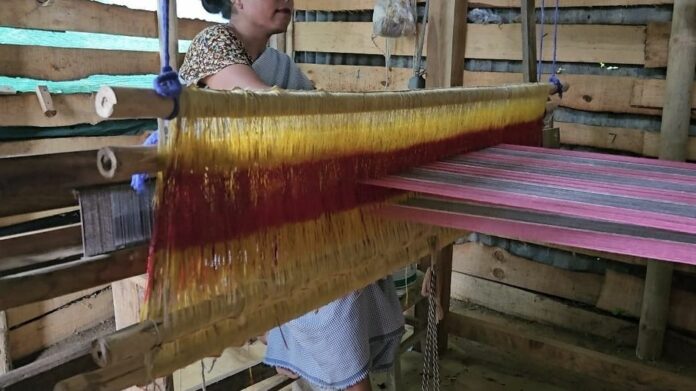
Shillong, Dec 30: The Geographical Indication status granted to Meghalaya’s indigenous eri silk fabric, ryndia, was highlighted by the Ministry of Textiles as one of the most significant achievements of India’s textiles sector in 2025, with officials pointing to its impact on rural incomes and sustainable production practices.
The ministry flagged the recognition during the Year of Textile Reforms, a phase marked by steady expansion in silk and sericulture. India continued to hold its position as the world’s second-largest silk producer, with raw silk production increasing to 41,121 metric tonnes in 2024–25 from 26,480 metric tonnes in 2013–14, reflecting a growth of about 55 per cent. Productivity levels also improved over the same period, rising from 96 kg per hectare to 112 kg per hectare.
Officials said higher output was accompanied by stronger returns for farmers. Prices of mulberry cocoons rose sharply, climbing by nearly 46 per cent from Rs 384 per kg in 2013–14 to Rs 560 per kg in 2024–25.
Employment generation in sericulture also saw notable growth. The number of people engaged in the sector increased from around 78 lakh in 2013–14 to nearly 98 lakh in 2024–25, underscoring its role in supporting rural livelihoods and providing income opportunities, particularly for women.
According to the ministry, the GI tag for ryndia played an important role in driving these outcomes by improving earnings for cocoon farmers, expanding rural employment, encouraging greater participation of women and promoting innovation through GI-based branding. The recognition also helped reinforce environmentally sustainable and eco-friendly silk production methods.
The ministry said the success associated with ryndia reflected a broader effort to safeguard traditional textiles, empower local communities and enhance India’s profile in the global silk and textiles market.
