
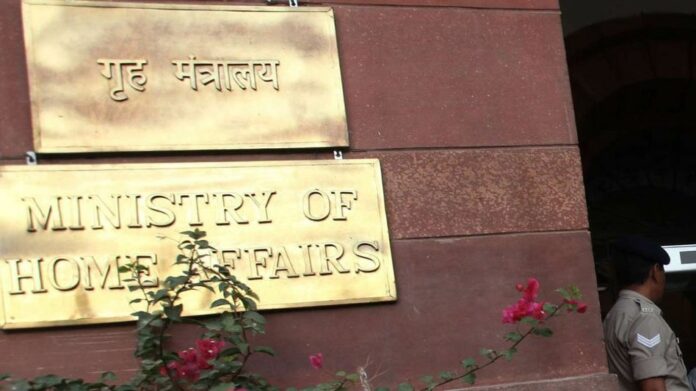
New Delhi: The Ministry of Home Affairs (MHA) held a two-day dialogue with representatives of the Kuki-Zo armed groups under the Suspension of Operation (SoO) agreements — the Kuki National Organisation (KNO) and the United People’s Front (UPF) — on November 6 and 7 in New Delhi, focusing on the community’s longstanding political demand for a Union Territory with a Legislative Assembly.
The talks, chaired by A.K. Mishra, Advisor (North East) to the MHA, brought together senior leaders from both umbrella organisations representing the Kuki-Zo political and armed leadership. The first day reviewed the implementation of the September 4 tripartite agreement signed between the Centre, the Government of Manipur, and the SoO groups. The Kuki-Zo delegations drew attention to the breakdown of governance and law and order in their areas following last year’s ethnic violence, pressing for an alternative administrative arrangement to ensure peace, security, and development.
On the second day, deliberations centred on the Kuki-Zo demand for Union Territory status with a legislature. The groups reiterated that coexistence under Manipur’s current administrative framework was no longer possible in the aftermath of what they termed “ethnic cleansing” beginning on May 3, 2023, in Imphal. The leaders argued that their demand was historically and constitutionally grounded, noting that before Independence, the Kuki-Zo Hills were designated as an “Excluded Area” under the Government of India Act, 1935, administered by the British Political Agent rather than the Meitei monarchy.
Emphasising that the tribal land ownership system differs fundamentally from the valley’s state-controlled model, the delegations described their proposal as a restoration of pre-Independence autonomy, not an act of division. They also recalled that during Manipur’s merger with India in 1949, the Meitei king received compensation while Kuki-Zo chiefs were left without recognition of their traditional governance rights.
Responding to the submissions, A.K. Mishra assured the groups that the Centre remains attentive to the concerns of the Kuki-Zo people but clarified that current Government policy does not favour the creation of new Union Territories. He highlighted the need for comprehensive consultations with all communities in Manipur before any administrative restructuring could be considered.
However, the KNO and UPF leaders urged the Centre to review its position, arguing that constitutional safeguards should take precedence over policy restrictions. They appealed for the protection of Kuki-Zo lives, land, and property through constitutional provisions.
The discussions also touched upon land and forest rights, the protection of traditional chieftainship, and tribal development. The SoO groups called for the MHA’s direct involvement in safeguarding community land ownership, simplifying succession procedures for village chiefs, and easing land registration processes, which they said had become difficult due to the insecurity surrounding Imphal.
The issue of Internally Displaced Persons (IDPs) was also raised prominently, with the delegations urging the Government to expedite rehabilitation, provide housing, and strengthen security arrangements for displaced families.
Both sides agreed to continue confidence-building measures and maintain regular dialogue to advance the peace process. The talks are being viewed as a significant step toward addressing the Kuki-Zo community’s political aspirations and restoring stability in Manipur’s conflict-affected regions.
