
Meghalaya’s technology sector is moving beyond policy initiatives and infrastructure development, with local IT hiring, expanding technology parks and a growing focus on artificial intelligence (AI) shaping the state’s digital economy.
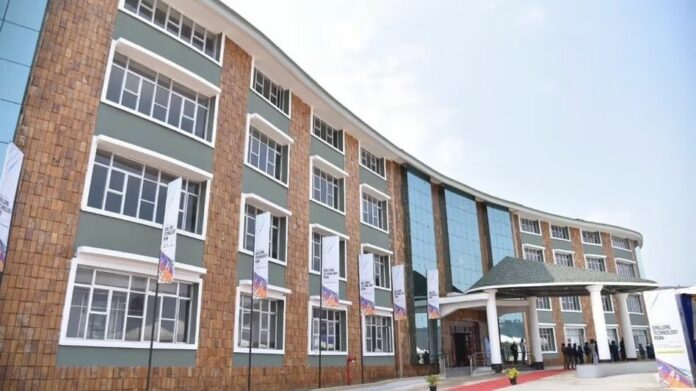
The shift is most evident at the Shillong Technology Park in Umsawli, New Shillong, where the first phase is fully occupied by IT and IT-enabled services companies, banks, software firms and other technology businesses.
The facility has created more than 1,400 jobs, including over 700 positions held by women. The employment figures point to a growing local technology workforce in a state where young people have traditionally had to look outside Meghalaya for opportunities in the sector.
The second phase of the Shillong Technology Park, spread across around 1.8 lakh square feet, is nearing completion and is expected to provide additional space for technology and IT-enabled services companies.
The expansion follows the Meghalaya Information Technology and Information Technology Enabled Services (IT & ITeS) Promotion Policy, 2024, introduced to attract investment, encourage sectoral growth and expand the state’s digital economy.
The government has set a broader target of making Meghalaya a $16-billion economy by 2032 and aims to place the state among India’s top 10 states in IT and IT-enabled services over the next decade.
The technology push is also expanding to the Garo Hills. The Tura IT Park, coming up on the outskirts of Doldegre in Tura, was announced in 2024 and received Rs 126.94 crore from the Union Ministry of Development of the Northeastern Region under the PM-DevINE scheme.
By late August 2026, the project had reached 78.67 per cent physical progress, with construction proceeding as scheduled. The facility is expected to expand technology infrastructure beyond Shillong and create another base for IT and IT-enabled services in the state.
The two technology parks are being developed alongside efforts to expand Meghalaya’s skilled workforce. AI trainers are being recruited for institutions including Shillong Polytechnic, ITI Rynjah and ITI Tura, while the Meghalaya State Skill Development Society is expanding training in artificial intelligence and machine learning.
The state’s AI focus has also extended to industry engagement. A regional AI impact conference in Meghalaya drew more than 700 participants, while AI SPARK: Accelerating Meghalaya Startups was held at the Shillong Technology Park. A NASSCOM industry leaders’ meet in Shillong in May 2026 also brought together representatives from the technology and business-processing sectors to discuss IT, skilling and employment opportunities.
Technology is also becoming part of Meghalaya’s approach to public services. Shillong’s Integrated Command and Control Centre, established under the Smart City Mission, uses AI-enabled video analytics and a network of cameras for surveillance, traffic management, crime detection and emergency response.
The state is developing additional Data and AI Labs and an AI Centre of Excellence, while exploring the use of local languages in AI-based applications.
Technology initiatives are also being directed at local challenges. An Internet of Things sensor network has been deployed across 70,000 water springs to collect real-time data for water-resource management and conservation.
With the Shillong Technology Park already generating employment, its second phase nearing completion, the Tura IT Park progressing and AI becoming part of skilling and governance, Meghalaya is building the components of a technology ecosystem focused on companies, skilled jobs and solutions for local needs.
