
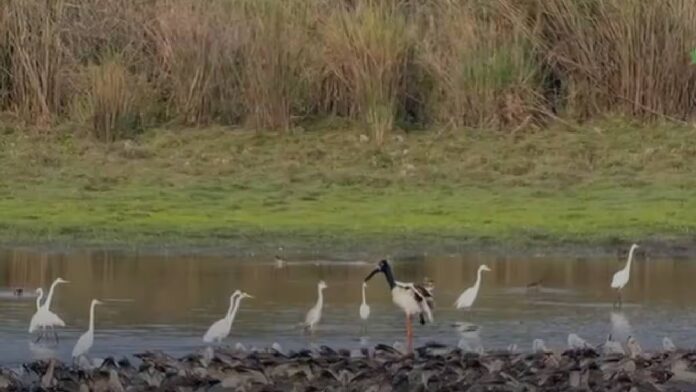
Guwahati, Feb 24: After months of vibrant activity, migratory birds that had flocked to Kaziranga National Park from distant regions began their journey back to their native habitats, marking the end of another eventful winter season at the world-renowned wildlife reserve.
Each year, the floodplains and wetlands of the park transform into a thriving refuge for migratory birds escaping the severe winters of Central and East Asia. Between October and February, Kaziranga serves as a seasonal sanctuary for avian visitors arriving from countries such as Mongolia, Siberia, China and Russia.
According to the latest census conducted by park authorities, as many as 103 species of foreign migratory birds were recorded this season, reaffirming Kaziranga’s growing stature as an international avian hotspot. The annual bird count remained a crucial ecological exercise, helping officials monitor biodiversity health and track migratory trends across continents.
Sharing details, Park Director Dr Sonali Ghosh stated that with the onset of summer, most of the migratory birds had now departed for their native breeding grounds. Their return signalled the conclusion of the winter migration cycle, which not only enriched the park’s ecological vibrancy but also attracted birdwatchers and wildlife enthusiasts from across the country.
Globally acclaimed for its population of the one-horned rhinoceros, Kaziranga has increasingly gained recognition as a vital habitat for migratory birds. The seasonal influx underscored the ecological richness of its wetlands, grasslands and riverine ecosystems, which offer ideal feeding and resting grounds.
Wildlife experts observed that the steady arrival of over a hundred foreign species reflected the ecological stability of the region. At a time when climate change and habitat degradation continue to disrupt traditional migratory corridors worldwide, Kaziranga’s sustained role as a secure winter refuge assumed heightened importance. As temperatures rose and the wetlands gradually adapted to the changing season, the park prepared for a quieter interlude until the skies once again welcomed winged visitors in the next winter cycle.
