
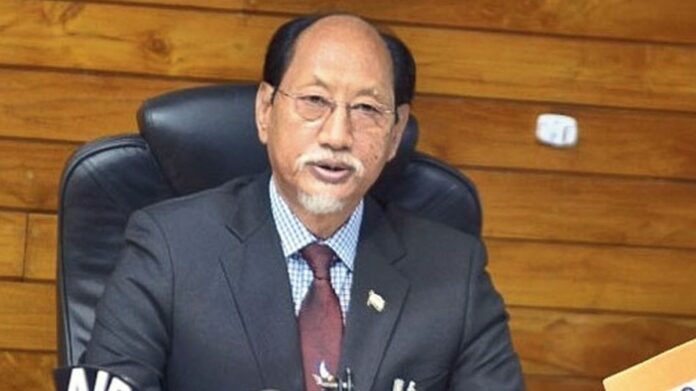
The Nagaland Cabinet on February 4 took a series of significant policy decisions on the Eastern Nagaland People’s Organisation’s (ENPO) demand for Frontier Nagaland Territory, oil and natural gas exploration, and long-pending landholding reforms, signalling a more assertive approach on politically sensitive and economically critical issues.
Government spokesperson and minister K G Kenye said the Cabinet, which met at Chumoukedima, reviewed the status of the ENPO demand and expressed hope that a breakthrough could be announced soon. Discussions between the ENPO and the Government of India are scheduled to be held in New Delhi, and the state government is “keeping its fingers crossed” for a positive outcome. Describing the issue as one pending for over a decade, Kenye said the government hopes it will finally be resolved in line with the wishes and aspirations of the people of eastern Nagaland.
To strengthen engagement with the Centre on political and constitutional matters, the Cabinet decided to constitute a sub-committee under the Political Affairs Committee. The sub-committee will be convened by Chief Minister Neiphiu Rio and include the two Deputy Chief Ministers, Nagaland’s two Members of Parliament, and select Cabinet ministers. A delegation from this group has already left for New Delhi to raise concerns related to the Free Movement Regime and the re-imposition of the Protected Area Permit (PAP), which the state government believes is adversely impacting Nagaland.
The Cabinet also revisited the long-pending issue of oil and natural gas exploration in the state. Kenye said the matter had been delayed due to litigation but noted that the court had agreed to hear it. With the concerned organisation having withdrawn its case, the issue has now become infructuous, although a final judicial verdict is still awaited.
He said the Cabinet has decided to proceed with oil and gas exploration based on the special constitutional protections under Article 371A. Emphasising Nagaland’s distinct constitutional position, Kenye said Article 371A clearly provides that land and its resources belong to the people of Nagaland, unlike in other states where petroleum and natural gas are central subjects. He added that all resources, above and below the surface, belong to landowners and the people, with the state government acting only on their mandate and consent. Kenye also expressed regret that internal differences had led to litigation, delaying progress on resource exploration.
Another major decision relates to reforming the landholding system. Kenye said that despite multiple legislations and office memorandums over the years, the state had failed to adopt a firm and decisive approach to land regulation. In view of the Inner Line Permit regime, the Bengal Eastern Frontier Regulation, and the Register of Indigenous Inhabitants of Nagaland, the government has now decided to introduce fresh directives.
Under the new policy approach, non-cadastral lands and government-occupied lands that were earlier not issued individual pattas will now be required to undergo proper registration, obtain land pattas, and pay land revenue like other private landowners. Kenye said these measures are aimed at ensuring long-term clarity, accountability, and regulation in Nagaland’s landholding system, with detailed notifications to be issued in the coming days.
