
Modern scientific research must actively adapt and sustain vanishing traditional knowledge systems before youth outmigration causes them to disappear entirely, NITI Aayog member Joram Aniya stated in Imphal on Monday. Addressing a lecture organized by the Institute of Bioresources and Sustainable Development (IBSD), Aniya argued that generational indigenous practices should not merely be treated as passive cultural heritage, but rather empirically tested, documented, and strengthened through modern science.
To illustrate the ecological value of these practices, Aniya highlighted Arunachal Pradesh’s Apatani agricultural model in Ziro, where farmers sustainably combine paddy cultivation, fish farming, and crop production on field bunds. She cautioned, however, that sustaining these complex systems is growing increasingly difficult as younger community members leave rural areas for outside education and employment. To resolve labor and structural maintenance challenges, Aniya urged researchers to deploy biotechnology for soil and water conservation, emphasizing that modern advancements must reinforce traditional methods rather than displace them.
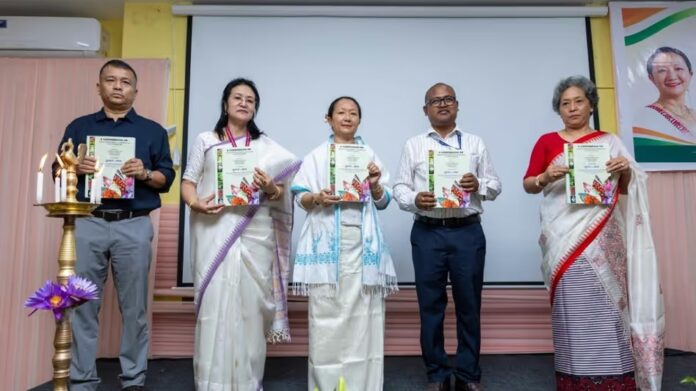
Framing the issue within the broader “Viksit Bharat 2047” vision, Aniya urged scientists to respect community-led natural resource management instead of dismissing ancestral wisdom as folklore. During the event, IBSD also released a compendium on medicinal plants of the Zingiberaceae family in Northeast India, while institute director Nanaocha Sharma confirmed ongoing efforts to secure Geographical Indication (GI) tags for two indigenous varieties of Manipur black rice.
