
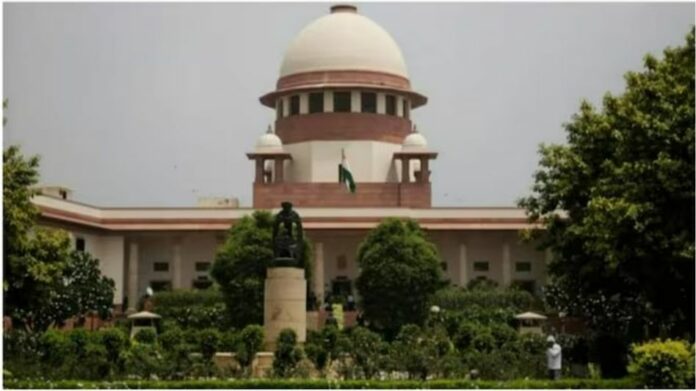
Agartala, Dec 31: A public interest litigation has been filed before the Supreme Court seeking judicial intervention following the death of Anjel Chakma, a 24-year-old MBA student from Tripura who succumbed to injuries sustained in an alleged racially motivated assault in Dehradun.
Chakma died on December 26, 2025, after remaining hospitalised for more than two weeks. He had been stabbed during an altercation on December 9 in the Selaqui area of Uttarakhand’s capital. The petition, moved under Article 32 of the Constitution by Anoop Prakash Awasthi, argues that the incident exposes systemic failures in preventing and addressing racial violence against people from India’s north-eastern states.
According to the plea, Chakma and his younger brother were out shopping when they were allegedly subjected to racial abuse based on their physical appearance by a group of men. The situation reportedly escalated into a violent attack in which both brothers were beaten and stabbed. Chakma sustained serious injuries to his neck and spine and remained unconscious throughout his treatment before eventually succumbing to his wounds.
The petition contends that India’s criminal justice framework does not recognise racial bias as a distinct or aggravating factor at the initial stage of investigation. As a result, such cases are registered and investigated as routine offences, which, the plea claims, weakens their constitutional significance and allows a pattern of impunity to persist.
Referring to earlier incidents, including the 2014 killing of Nido Taniam and multiple assaults on students and workers from the Northeast in major cities, the petition notes that the Union government has acknowledged the issue in Parliament. However, it argues that no specific legislative or institutional mechanism has been put in place to deal with racially motivated crimes.
The plea further highlights that even the Bharatiya Nyaya Sanhita, 2023, and the Bharatiya Nagarik Suraksha Sanhita, 2023, do not provide statutory recognition of hate crimes or racial offences. It points out that police are not mandated to record bias motivation while registering FIRs, nor are there specialised investigative procedures or victim-protection systems for such cases.
According to the petitioner, this gap in the legal framework violates the guarantees of equality, non-discrimination, freedom and the right to life under Articles 14, 15, 19 and 21 of the Constitution, and undermines the constitutional principle of fraternity.
The petition has urged the Supreme Court to frame interim guidelines until Parliament enacts appropriate legislation. Among the measures sought are the formal recognition of racial slurs as a category of hate crime with defined penalties, the creation of nodal agencies at both the Centre and state levels to handle such offences, and the establishment of dedicated police units in every district and metropolitan area.
It has also called for directions to promote awareness and social cohesion through workshops, seminars and discussions in educational institutions, with the aim of fostering harmony among diverse communities.
