
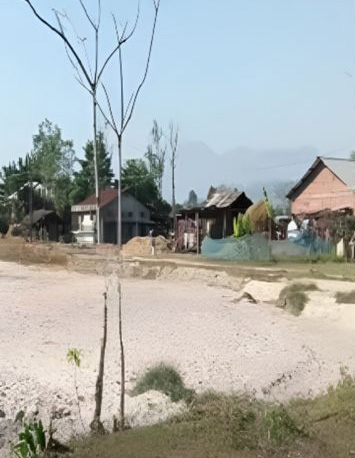
North Lakhimpur: Large swathes of agricultural land in villages west of Assam’s Lakhimpur district have turned into stretches of sand, leaving once-fertile paddy fields barren. The area, which borders Biswanath district, now appears desolate during what is usually a peak harvest season.
Villages including No. 1 Sesa, No. 2 Sesa, Sesa-Rangajan, Panigaon, Phutabhog and Khalihamari under the Narayanpur Revenue Circle are buried under thick layers of sand deposited by the overflowing Sesa river during the May–June monsoon. With paddy cultivation now impossible, agricultural output has collapsed, causing deep economic distress for thousands of residents.
Villagers blame inadequate flood protection on the left bank of the Sesa. They allege that an embankment built on the right bank by the Biswanath Water Resources Department—using geo-tubes and sluice gates—shielded Biswanath from flooding but diverted water toward Lakhimpur, triggering devastation on the opposite side.
Also Read: Assam: Mid-Day Meal Van Catches Fire Near Guwahati’s Saraighat Bridge
Beyond cropland destruction, the sand has disrupted daily life—roads remain uneven and difficult to navigate, schools like Srimanta LP School are affected, and community structures such as Naam Ghars have been raised to cope with deposits.
Residents are urging the state government to install permanent flood-control measures before the next monsoon arrives, warning that without intervention, more land and livelihoods may be lost.
