
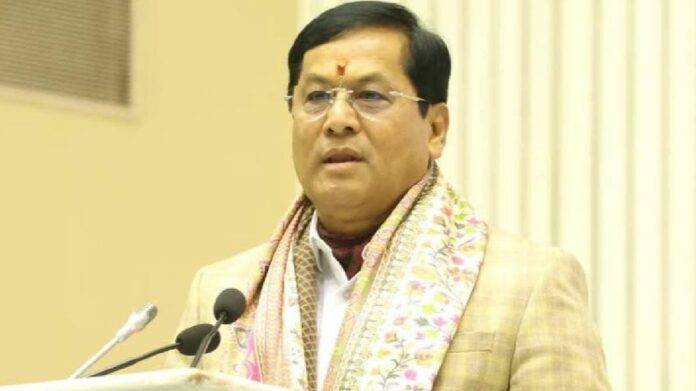
Guwahati, March 5: Union Minister for Ports, Shipping and Waterways Sarbananda Sonowal on March 5 laid the foundation stones for four river lighthouses along the Brahmaputra River at a ceremony held at Lachit Ghat in Guwahati, marking the first time lighthouse infrastructure will be established on an inland waterway in India.
The project will see the construction of lighthouses at Pandu in Kamrup Metropolitan district, as well as at Bogibeel, Silghat, and Biswanath Ghat. These locations fall along National Waterway 2, one of the country’s key inland routes used for cargo and passenger transport. The project, estimated at around ₹84 crore, is being executed by the Directorate General of Lighthouses and Lightships in partnership with the Inland Waterways Authority of India under the Ministry of Ports, Shipping and Waterways.
Each of the proposed lighthouses will stand about 20 metres tall and will be powered entirely by solar energy. Officials said the structures will have a geographical range of 14 nautical miles and a luminous range of 8 to 10 nautical miles, helping vessels navigate the river more safely.
Apart from assisting navigation, the sites are also planned as tourism destinations. Facilities such as museums, amphitheatres, cafeterias, children’s play areas, souvenir shops and landscaped public spaces will be developed at each location, turning them into recreational attractions along the Brahmaputra riverfront.
The project comes amid a significant rise in cargo movement along National Waterway 2. According to the Inland Waterways Authority of India, freight traffic on the route recorded a 53 per cent increase during the 2024–25 financial year, reflecting the growing use of river transport by industries dealing in commodities such as tea, coal and fertilisers across Assam and the wider Northeast.
Addressing the gathering, Sonowal said the initiative would enhance round-the-clock navigation and strengthen the region’s logistics ecosystem. He noted that inland waterways are emerging as an important economic driver under the leadership of Narendra Modi, adding that transporting freight by water is significantly cheaper and produces lower carbon emissions compared to road transport.
The minister described the riverine lighthouse network as a step towards unlocking the economic potential of India’s river systems. He also emphasised that developing the Brahmaputra as a major freight corridor is crucial for the Northeast, where difficult terrain and traffic congestion often place heavy pressure on road infrastructure.
The event was attended by Assam ministers Ranjeet Kumar Dass, Charan Boro and Jayanta Mallabaruah, along with Bijuli Kalita Medhi, Member of Parliament from Guwahati, and Siddhartha Bhattacharya, MLA of East Guwahati. Senior officials from the ministry and maritime agencies were also present.
Stretching about 891 kilometres from Dhubri in West Bengal to Sadiya in Upper Assam, National Waterway 2 represents the longest navigable inland waterway stretch in India and runs through the heart of the Northeast. Officials said the four lighthouse projects are expected to be completed within 24 months after contracts are awarded, forming part of a broader effort to modernise inland navigation infrastructure across India’s river systems.
