
The venerable Stilwell Road, an artery of logistical importance during World War II, is on the cusp of a significant metamorphosis, transforming from a historical military supply route into a dynamic cross-border trade corridor. This revival is being driven by concerted efforts from India and Myanmar to bolster economic cooperation and connectivity across their shared border.
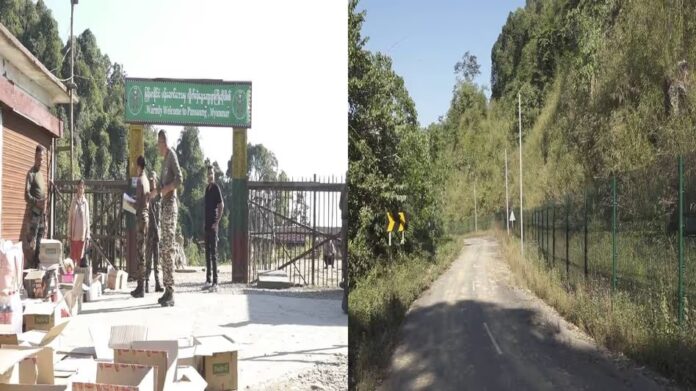
A critical component of this infrastructural upgrade involves the Government of India commencing the fencing of strategic segments along the India–Myanmar border. Construction is actively underway on a stretch spanning approximately 7.3 kilometres between Border Pillar (BP) 173 and BP 172. To manage and streamline movement across this newly demarcated area, a plan has been devised to install six controlled-access gates. Complementary infrastructure is also being developed, including an approach road near BP 173 to accommodate vehicular transit, with a corresponding vehicle access gate scheduled for installation near BP 172.
Currently, trade between the residents of Pangsau and adjacent areas in Myanmar is characterized by small-scale, pedestrian-based exchanges of limited goods. Officials anticipate that the new, formalized infrastructure will facilitate larger volumes of goods and establish a better-regulated framework, effectively laying the groundwork for a structured and formalized trade ecosystem. Furthermore, the government has already demonstrated its readiness to accommodate this expanded commerce, having completed the surveying and land allocation for dedicated land ports and finalized the construction of necessary Customs infrastructure.
This revitalization of the Stilwell Road and its associated border facilities is projected to yield substantial economic benefits, particularly in generating employment across logistics, transportation, hospitality, and border services. This will provide essential livelihood support to local populations in Assam, Arunachal Pradesh, and the border regions of Myanmar. Cross-border movement is presently governed by the Free Movement Regime (FMR), which permits local residents to travel up to 10 km on either side without documentation. As the regulated gates and improved infrastructure come online, authorities are evaluating potential modifications to the FMR to strengthen security while carefully maintaining existing local socio-economic connections. Officials stress that the fencing initiative is not intended to restrict the long-established cultural and commercial exchanges but rather to fortify border security, ensure smooth legal movement, and pave the path for a modernized trade corridor, thereby breathing new life into a historic route central to global wartime logistics.
