
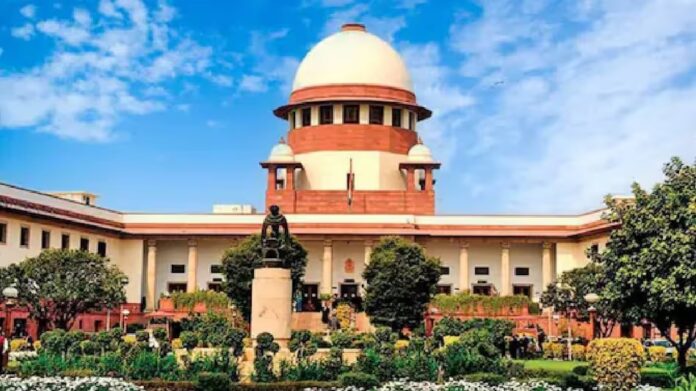
The Supreme Court of India issued a significant clarification on Wednesday, December 17, modifying its previous August 12 order regarding the operation of older vehicles within the National Capital Region (NCR). The Bench, led by Chief Justice of India Surya Kant alongside Justices Joymalya Bagchi and Vipul Pancholi, ruled that coercive action may now be taken against diesel vehicles older than 10 years and petrol vehicles older than 15 years if they do not meet Bharat Stage-IV (BS-IV) emission standards. This decision specifically targets older, more polluting models that fail to comply with modern environmental regulations.
This judicial intervention followed a plea from the Delhi Government, which highlighted the capital’s deteriorating air quality and the necessity for more stringent regulatory measures against high-emission transport. Representing the Delhi Government, Additional Solicitor General Aishwarya Bhati argued for the modification of the court’s earlier August 12, 2025, order to allow enforcement against vehicles that only comply with BS-III standards. She contended that these older vehicles demonstrate significantly poor emission performance and are disproportionate contributors to the pollution crisis currently gripping the Delhi-NCR area.
The government’s position received support from Senior Advocate Aparajita Singh, acting as amicus curiae in the long-standing MC Mehta v. Union of India air pollution case. Singh informed the court that because BS-IV standards were only introduced in 2010, any vehicle still running on BS-III norms predates this era and poses a legitimate concern for public health. By linking regulatory action to emission standards rather than age alone, the court aims to refine its approach to environmental protection while offering a degree of leniency to those who maintained newer, cleaner-burning engines.
In dictating the order, the Bench clarified that the protection granted in the August 12 ruling remains for owners of BS-IV or newer vehicles; such owners will not face coercive action based solely on the age of the vehicle—be it the 10-year limit for diesel or the 15-year limit for petrol. However, the court was firm in stating that any vehicle failing to meet the BS-IV standard would not be eligible for this protection. This distinction effectively shifts the focus of enforcement from a blanket age-based ban to one centered on the actual emission capabilities of the individual vehicle.
This ruling builds upon a decade of legal precedent aimed at cleaning the region’s air. In 2015, the National Green Tribunal (NGT) initially prohibited the use of diesel vehicles over 10 years old and petrol vehicles over 15 years old in the NCR, a directive the Supreme Court upheld in 2018. To streamline these efforts, the Delhi Government notified the “Guidelines for Handling End-of-Life Vehicles in Public Places of Delhi” in 2024, creating a formal framework for identifying, removing, and disposing of vehicles that have reached the end of their legal or environmental utility.
The path to this clarification has been marked by recent policy shifts and public discourse. Earlier in 2025, the Delhi Government had announced a plan to deny fuel to end-of-life vehicles at petrol pumps starting July 1. However, that move was eventually suspended following significant public backlash. The subsequent legal maneuvering by the government to seek a more balanced regulatory approach eventually led to the August 12 order and this latest clarification from the Supreme Court, providing a clearer roadmap for environmental enforcement in the national capital.
