
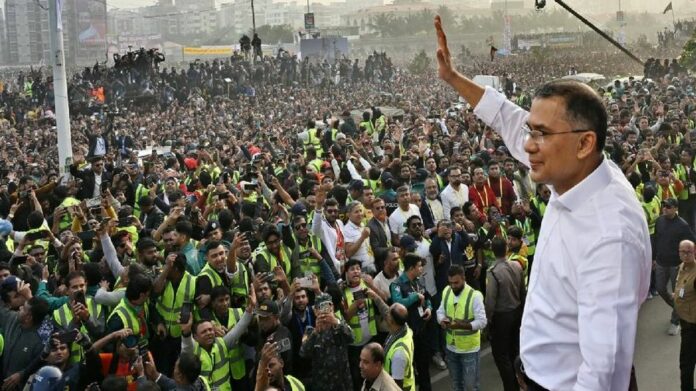
Dhaka, Feb 17: In a significant development in Bangladesh’s political landscape, Tarique Rahman is set to be sworn in as Prime Minister on February 17, nearly two years after the ouster of Sheikh Hasina in 2024. The oath-taking ceremony in Dhaka will formally usher in a new government led by the Bangladesh Nationalist Party (BNP), which secured a decisive mandate in the recent general elections.
Rahman, the son of former Prime Minister Khaleda Zia, returned to Bangladesh after 17 years in exile to lead the BNP’s campaign. His political comeback culminated in a landslide victory, reshaping the country’s power dynamics and signalling voter appetite for change.
According to party sources, newly elected Members of Parliament will take their oath at 9:30 am at the Jatiya Sangsad Bhaban, followed by the swearing-in of the Council of Ministers at 4:00 pm. BNP MP Rashiduzzaman Millat said several foreign dignitaries are expected to attend, though neither Indian Prime Minister Narendra Modi nor Pakistan’s Prime Minister will be present.
India will be represented by Lok Sabha Speaker Om Birla, according to a statement from the Ministry of External Affairs. The ministry said Birla’s participation underscores the “deep and enduring friendship” between the two countries and reaffirms New Delhi’s commitment to democratic values and bilateral cooperation.
Even as the new government prepares to assume office, uncertainty surrounds a proposed constitutional reform process. Reports in Prothom Alo indicate that questions remain over whether elected MPs may be required to take a second oath as members of a proposed constitutional reform council. The timing and structure of the council — tasked with implementing proposals under the July National Charter — are yet to be clarified.
The transition represents not merely a routine change of leadership but potentially a broader recalibration of Bangladesh’s political and constitutional framework. As Dhaka enters a new phase, attention will focus on how Rahman’s administration balances its reform agenda with governance stability at a critical juncture for the nation.
