
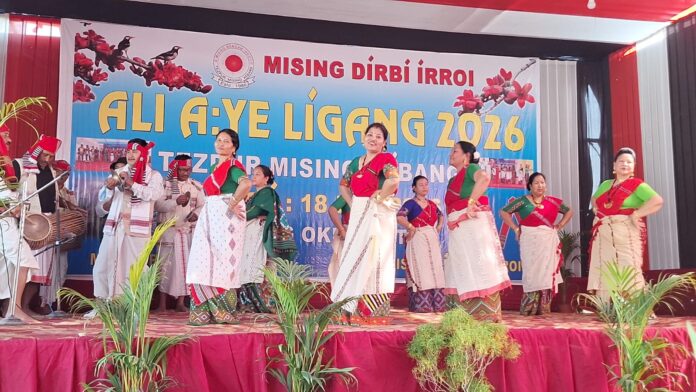
Tezpur: Alongwith rest of the state people of the Mising community in Tezpur celebrated Ali Aye Ligang, the traditional agricultural festival of the community with great enthusiasm and cultural pride on Wednesday at the Murong Ghar in Dolabari, here under the initiative of the Tezpur Mishing Kebang. Observed on the first Wednesday of the Assamese month of Phagun, the day-long programme began with a community cleanliness drive, followed by Pura:ra: Naam, traditional games, and Smriti Tarpan. Floral tributes were paid to pioneering Mising leader Taburam Taid, cultural icon Bhupen Hazarika and Zubeen Garg by chief advisers Dinen Pegu and Dr. Rajiv Doley of Tezpur University along with office-bearers of the Kebang.
The central religious ritual of the festival, Ligang Lrigad, was formally inaugurated by the vice-president of the Tezpur Mising Kebang, Migang Dipen Kaman. The Murong Ghar courtyard resonated with Oinitom performances, traditional songs and dances, as members of the community participated enthusiastically in the age-old agricultural rites marking the sowing season. A Gumrag Ch:man (dance sequence) was later presented under the leadership of Chandrakanta Doley, Rajkumar Pegu, Rabin Doley, Ranju Kutum, Rekha Kumbang, Puspalata Doley and Jamuna Pegu. This was followed by a cultural evening featuring a chorus of Mising songs and a felicitation programme for students.
Also Read: Assam CM Dr. Sarma launches PMS Portal for provincialization
The event was attended by invited guests including Dr. Palashmani Saikia, Principal of Darrang College and Bharat Mili, Vice-President of the Mising Cultural Society. Bharat Mili elaborated on the mythology and significance of Ali-Aye-Ligang. Addressing the gathering, Dr. Saikia also felicitated noted nature-lover and academic Haren Morang of Darrang College for bringing laurels to Tezpur by securing a top position at the National Masters Badminton Championship. The celebrations concluded with vibrant performances of Gumrag, Oinitom and other traditional dances by youths and elders alike, followed by the serving of customary Mising cuisine to all guests, reflecting the community’s rich cultural heritage and spirit of hospitality.
