
The Tripura government’s move to rename Raj Bhavan as Lok Bhavan has stirred sharp political reactions across the state, following Governor Indrasena Reddy Nallu’s announcement that the change would take effect from 1 December. While the decision has received cautious approval from some quarters, it has also drawn criticism from opposition leaders who question its real purpose and impact.
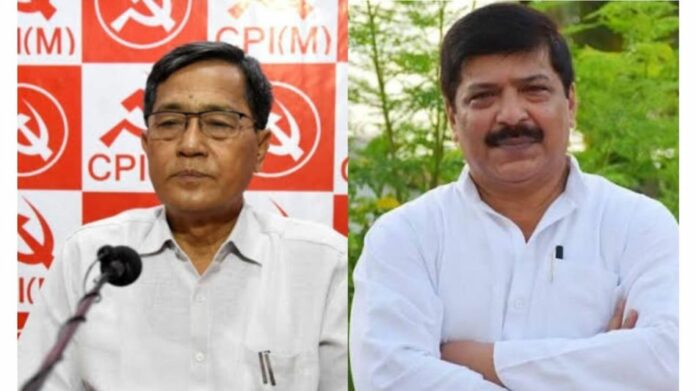
Leader of the Opposition and CPI(M) state secretary Jitendra Chaudhary called the renaming appropriate but stressed that symbolic steps must lead to meaningful change. He noted that the Governor’s office should function as a space where people can voice their concerns, especially at a time when, according to him, the government appears increasingly unapproachable. Chaudhary added that although he welcomed the decision, he doubted whether renaming alone would make the office more accessible. He also observed that his engagement with the present Governor had significantly reduced compared to past administrations.
Congress MLA and former minister Sudip Roy Barman took a stronger stand, criticising the move as yet another example of what he described as the BJP government’s reliance on symbolism over substance. He argued that the renaming of Raj Bhavan offers no real advantage to citizens and accused the ruling party of using the Governor’s office as a political tool rather than as a guardian of constitutional values. He pointed to several issues facing Tripura—including corruption, violence and law-and-order concerns—and questioned the Governor’s silence on such matters.
Barman contended that the change was aimed at diverting public attention from government failures. He added that if the government believed the term “Raj” was inappropriate, it should also consider renaming “Rajneeti” to “Lok Neeti,” underscoring the Congress party’s scepticism about the intent behind the rebranding.
The debate reflects a broader political divide over whether renaming institutions carries any real value or merely serves as a distraction from pressing governance challenges.
