
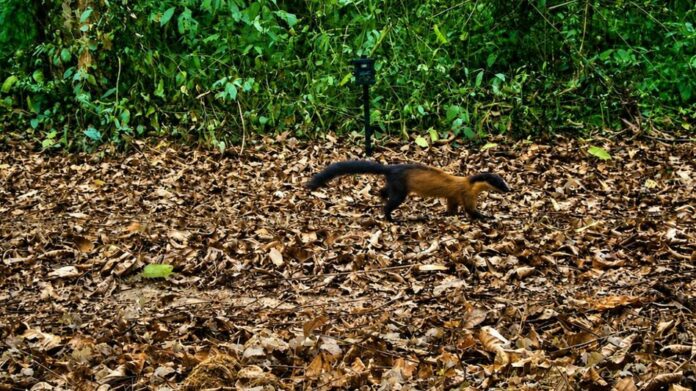
Guwahati, June 2: A new wildlife sighting in Assam’s Kaziranga National Park and Tiger Reserve has drawn attention after the yellow-throated marten was recently recorded in the protected area, underlining the region’s rich biodiversity and ongoing conservation success.
According to the Chief Minister’s Office, the sighting of the yellow-throated marten marks an important addition to Kaziranga’s documented wildlife species. The development is being viewed as further evidence of the ecological resilience of the UNESCO World Heritage Site and the effectiveness of habitat protection measures implemented in recent years.
In a post on social media, the CMO stated that the sighting reflects the strength of Assam’s conservation model, which continues to support a wide range of wildlife species beyond its globally recognised population of one-horned rhinoceroses. It also credited the state’s conservation initiatives for fostering healthier ecosystems across protected areas.
Kaziranga National Park and Tiger Reserve, located across Golaghat and Nagaon districts, is India’s largest protected area in the Northeast and is internationally known for its one-horned rhinoceros population. The park also supports tigers, elephants, leopards, bears and a wide variety of bird species, making it one of the country’s most significant biodiversity hotspots.
Wildlife experts note that the presence of the yellow-throated marten, a carnivorous and highly agile mammal, indicates a healthy ecosystem with adequate forest cover and prey availability. The species is considered an important indicator of forest health and ecological balance.
Tourism in Kaziranga has also seen notable growth in recent years. Official data indicates that tourist footfall rose by more than 15 per cent in 2025–26, reaching 4.68 lakh visitors, while foreign tourist arrivals nearly doubled from 17,693 to 30,474 during the same period.
The latest sighting further strengthens Kaziranga’s reputation as a key biodiversity reserve and reinforces its position as one of India’s most successful conservation landscapes.
