
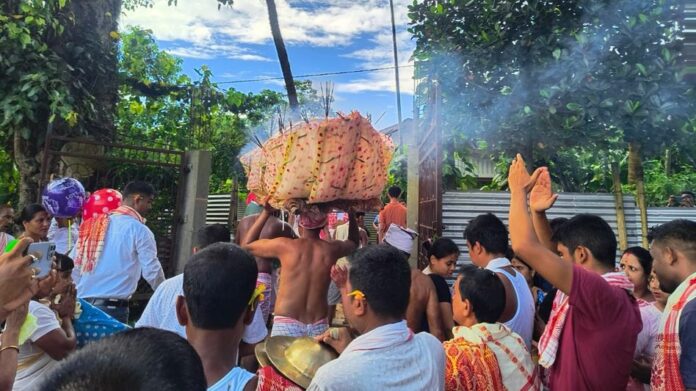
A centuries-old religious tradition continued in Assam’s Baksa district as residents of Paschim Chapra village in Barama observed a 135-year-old annual ceremony with devotion, preserving a ritual that has been passed down through generations.
The ceremony, held every year on an auspicious day during the Assamese month of Ahaar, takes place at the Chapra Hari Mandir premises. Villagers regard the event as an enduring symbol of their faith, cultural heritage and community unity.
According to local belief, the tradition originated more than a century ago when the village was struck by a devastating epidemic. Residents believe that Goddess Kechai Khaiti appeared in a dream and instructed villagers to perform specific rituals to overcome the crisis. They say the epidemic subsided after the rites were observed, following which the ceremony has been conducted annually in gratitude and remembrance.
As part of the customary observances, devotees offer a banana trunk altar decorated with vermilion, nine varieties of offerings, nine duck eggs, a pair of pigeons and a bunch of raw bananas in the name of Goddess Kechai Khaiti. The programme also features prayers, devotional songs and other religious rituals, drawing devotees into an atmosphere of spiritual devotion.
The event attracts not only villagers but also devotees from neighbouring areas, many of whom believe that sincere prayers offered during the ceremony help fulfil their wishes. Large numbers of people gather at the temple from morning until late in the evening to participate in the observances.
Despite its long history and cultural importance, the organisers said the annual ceremony has not received any financial assistance from the government. They claimed that the event has been organised every year solely through contributions collected from local residents.
Describing the ceremony as an important part of the region’s cultural identity and communal harmony, villagers have appealed to the state’s Culture Department, the local MLA and other authorities to provide financial support to help preserve and promote the 135-year-old tradition for future generations.
