
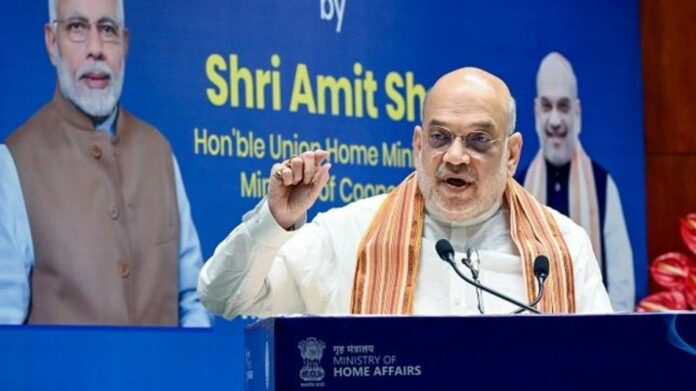
Union Home Minister Amit Shah is scheduled to attend the signing of a tripartite Memorandum of Understanding (MoU) between the Centre and the governments of Assam and Nagaland for the exploration and production of crude oil and natural gas along the Assam-Nagaland border on the evening of June 11.
The agreement will be signed at the Ministry of Home Affairs in New Delhi in the presence of Assam Chief Minister Himanta Biswa Sarma, Nagaland Chief Minister Neiphiu Rio, Union Home Secretary Govind Mohan and senior officials from the Centre as well as both state governments.
According to officials, the MoU is aimed at facilitating hydrocarbon exploration and production in the resource-rich areas along the Assam-Nagaland border, marking a significant step towards strengthening regional cooperation and accelerating economic development.
The agreement is expected to unlock the untapped crude oil and natural gas reserves of the border region, where exploration activities have long been affected by interstate boundary disputes.
Officials said the initiative reflects the Centre’s emphasis on cooperative federalism and its efforts to enhance energy security while promoting economic growth in the Northeast.
Amit Shah’s presence at the signing ceremony is being viewed as a reflection of the strategic importance attached to the agreement, both in terms of fostering cooperation between the two states and encouraging investment in the energy sector.
The proposed arrangement is also expected to act as a confidence-building measure between Assam and Nagaland, which have witnessed tensions over territorial claims in the past.
Sources indicated that the agreement is likely to include provisions relating to joint exploration, revenue-sharing mechanisms and the maintenance of law and order during operations. It is also expected to encourage participation by public sector and private energy companies, potentially generating employment opportunities and improving infrastructure in the region.
With India’s growing energy requirements and the government’s focus on increasing domestic hydrocarbon production, the agreement is being seen as an important component of the country’s long-term energy strategy and a catalyst for development in the Northeast.
