
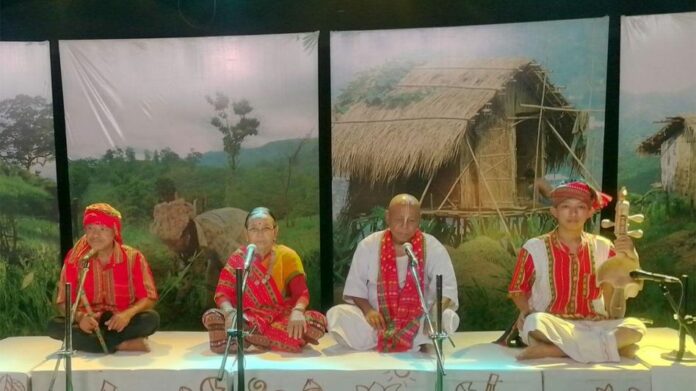
Agartala, June 24: Tripura’s traditional string instrument, the Sarinda, has been awarded a Geographical Indication (GI) tag, providing a significant boost to the state’s indigenous cultural heritage and traditional craftsmanship.
Registered as “Tripura Sarinda (Musical Instrument)”, the recognition is expected to strengthen efforts to preserve one of the state’s oldest folk instruments while promoting awareness of Tripura’s rich musical traditions.
Chief Minister Manik Saha described the achievement as a proud moment for the state, stating that the GI tag would help preserve and promote Tripura’s traditional musical heritage while creating new opportunities for artisans and musicians.
“The GI tag for Tripura Sarinda is a proud moment for our state. It will play a crucial role in preserving and promoting our traditional musical heritage while creating new opportunities for artisans and musicians,” Saha said.
The Chief Minister also congratulated the artisans, craftsmen and musicians whose contributions helped secure the recognition, noting that their efforts have sustained one of Tripura’s most cherished musical traditions.
With the inclusion of the Sarinda, Tripura now has four GI-tagged products. The others are the Tripura Queen Pineapple, Tripura Risha and Pachra (Rignai), and Matabari Pera.
Traditional musician Khetra Mohan Debbarma said the Sarinda has long been an integral part of Tripura’s indigenous culture and has been used by tribal communities for generations.
“Sarinda is a proud and essential musical instrument of our Tripura state. We have been using this instrument for generations,” he said.
Young tribal artist Athukuri Debbarma welcomed the recognition, describing it as an important acknowledgement of Tripura’s tribal heritage. He thanked both the Centre and the state government for supporting efforts to obtain the GI tag.
A handcrafted bowed string instrument, the Sarinda is closely associated with the folk music traditions of Tripura’s indigenous communities and remains a prominent symbol of the state’s cultural identity. The GI recognition is expected to support conservation efforts and provide greater opportunities for local artisans engaged in crafting and promoting the instrument.
