
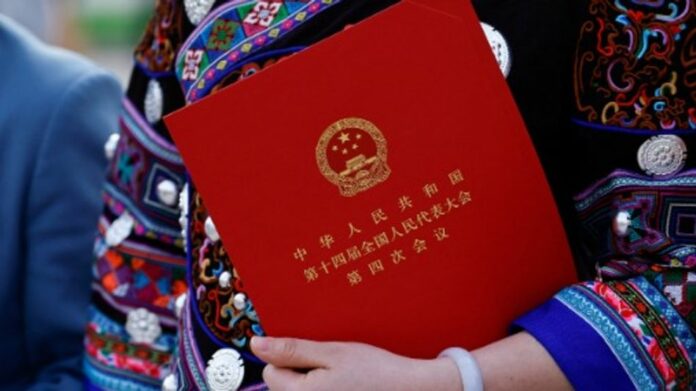
The Tibetan Settlement Office (TSO) in Gangtok, along with members of the local Tibetan community, has criticised China’s newly introduced “Ethnic Unity and Progress Law,” alleging that the legislation could adversely affect the cultural, linguistic and religious rights of ethnic minority communities.
In a statement, the community expressed concern over the law, which is scheduled to come into force on July 1, claiming that it would strengthen the use of Mandarin Chinese as the primary language in education, governance and public life in regions such as Tibet. According to the statement, the legislation could further limit the use of indigenous languages and traditional cultural practices.
The community also raised objections to provisions they said require parents to encourage loyalty to the Communist Party of China. They alleged that the law could be used to curb the transmission of traditional cultural and religious heritage across generations.
Members of the Tibetan community further claimed that certain provisions of the legislation may have implications beyond China’s borders, alleging that it could be invoked against individuals or organisations that publicly criticise the law.
Describing the legislation as a threat to the identity and cultural heritage of minority communities, the Tibetan Settlement Office and community members called on the international community to take note of the issue and support efforts to safeguard fundamental human rights and cultural freedoms.
