
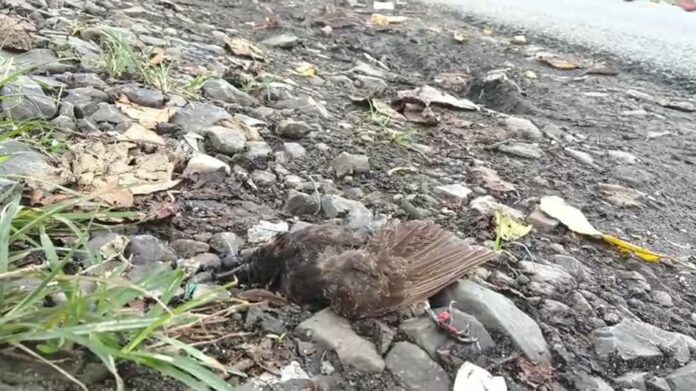
The death of a Red-vented Bulbul along National Highway-37 under the Doomdooma Forest Division has renewed concern over bird roadkills in Upper Assam, with conservationists warning that increasing vehicular traffic is posing a growing threat to the region’s rich avian biodiversity.
The bird was found dead by the roadside on July 7, prompting fresh calls for systematic monitoring of wildlife mortality along highways passing through ecologically sensitive areas. Although the exact cause of death could not be independently confirmed, wildlife observers said collisions with speeding vehicles remain one of the leading causes of bird fatalities on roads traversing forested landscapes.
“Roadkill is not limited to elephants or other large mammals. Countless birds become silent victims every year, yet most incidents go undocumented. Their ecological role is too important to ignore,” a local wildlife enthusiast said.
The incident has drawn attention as Tinsukia is surrounded by major bird habitats, including Dibru-Saikhowa National Park, Dehing Patkai National Park and Maguri-Motapung Beel, which together support hundreds of resident and migratory bird species.
Conservation volunteers emphasised the need for scientific documentation of bird roadkills, responsible driving near forest stretches and greater public awareness to reduce wildlife mortality.
“Scientific monitoring, responsible driving near forest stretches and greater public awareness are essential to reducing bird mortality. Conservation begins with recognising even the smallest loss,” another conservation volunteer said.
Wildlife experts said documenting bird roadkill incidents and introducing targeted mitigation measures along vulnerable highway stretches are essential to protecting Assam’s rich bird diversity and minimising the impact of expanding road traffic on wildlife.
