
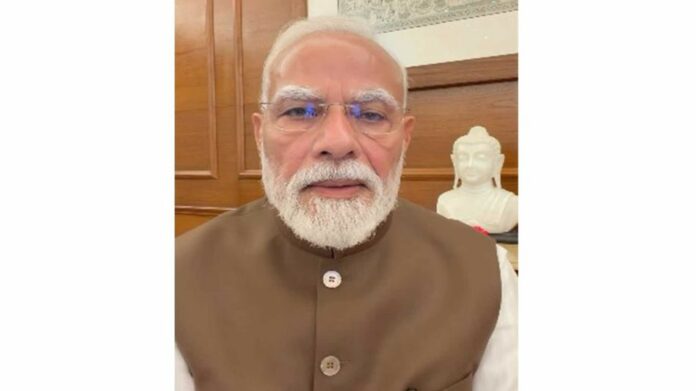
National, July 31: Prime Minister Narendra Modi on Thursday welcomed Parliament’s approval of the Public Examinations (Prevention of Unfair Means) Amendment Bill, 2026, describing it as a significant reform to strengthen the integrity of the country’s examination system. In a video message shared on Instagram, he said the legislation reflected the Centre’s commitment to making public examinations more transparent and credible while sending a strong message to those involved in paper leak rackets.
Modi said the government had been introducing reforms after extensive consultations with states, many of which had grappled with examination paper leaks for years. Stressing that such crimes jeopardise the future of students, he said education reforms were now essential across the country and called for greater use of technology to prevent examination-related malpractice. Warning those involved in organised cheating networks, he asserted that the “paper mafia” would face strict action and would not be spared under the strengthened legal framework.
The Prime Minister noted that the Bill was passed by both Houses of Parliament within two days after detailed discussions. He said the legislation introduced tougher legal provisions and reaffirmed the government’s resolve to build a reliable examination system that protects students from recurring paper leak incidents.
The Bill, which had earlier cleared the Lok Sabha, was approved by the Rajya Sabha on Thursday before being sent for Presidential assent. Opposition members staged a walkout from the Upper House ahead of the legislation’s passage.
Replying to the debate in the Rajya Sabha, Union Minister of State Jitendra Singh said the issue affected millions of students and families across the country. He stated that around 7.65 crore students would benefit from the new measures and highlighted the National Education Policy 2020 as a transformative reform that expanded academic choices for students. Singh also said investigations into examination-related offences would be required to conclude within two months, while trials in designated Special Fast Track Courts would be completed within three months of the filing of charge sheets.
He added that paper leaks had remained a persistent national challenge under successive governments and pointed to the expansion of higher education institutions and Eklavya schools as part of the government’s broader education initiatives.
Leader of the Opposition in the Rajya Sabha Mallikarjun Kharge criticised the legislation, arguing that it introduced only limited changes and did not go far enough to ensure transparent and paper leak-free examinations. While extending support to the Bill, he said the government had acted only after widespread public concern over examination irregularities. Kharge also called for a National Youth Employment Strategy, a fixed annual examination calendar, the filling of vacant government posts, particularly those reserved for Scheduled Caste and OBC candidates, and judicial oversight of investigations into police action against protesters.
The amended law significantly strengthens penalties for examination-related offences. Individuals found guilty of using unfair means can now face imprisonment ranging from five to ten years, while the maximum fine has been increased to ₹50 lakh. Service providers involved in malpractice may be fined up to ₹5 crore and barred from conducting public examinations for eight years. Organised examination fraud will attract a minimum prison term of seven years, extendable to ten years, along with fines of up to ₹10 crore.
The legislation also provides for the creation of a Special Task Force to investigate paper leak cases, mandates time-bound investigations, requires day-to-day hearings in Special Fast Track Courts and provides for the appointment of Special Public Prosecutors to ensure speedy prosecution of offenders.
