
Hareswar Borah
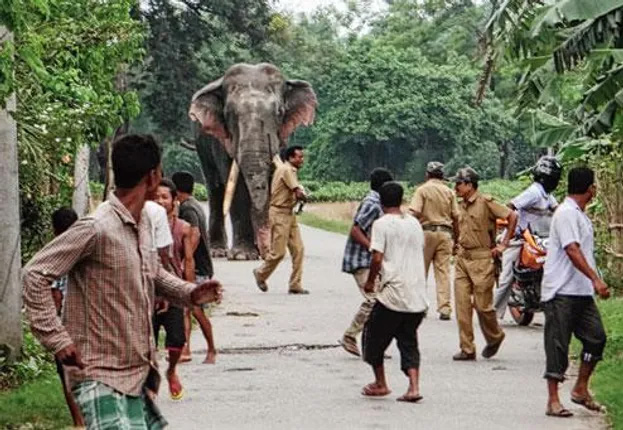
Nagaon: Uncontrolled deforestation has stripped several hill ranges across undivided Nagaon, Hojai, West Karbi Anglong and Karbi Anglong districts of their once-dense green cover, forcing wild elephant herds into croplands and residential areas in search of food and shelter. According to local sources, hills that were once so thick with forest that sunlight could not penetrate have now turned barren. The crisis is blamed on a combination of forest department negligence, lack of awareness among villagers living near the hills, and illegal timber operations allegedly backed by some forest officials. The destruction of forests has led to an acute shortage of habitat and food for wild elephants. With traditional food sources gone, herds are descending from the hills to the plains in large numbers, raiding paddy fields, tea gardens, and villages. The result has been frequent and violent man-elephant conflict, leading to deaths of both humans and elephants.
Also Read:India to Continue Russian Oil Imports Despite US Waiver Expiry: Petroleum Ministry
Nature lovers say the hills of Nagaon, Hojai and Karbi Anglong have been left sparse after years of felling. “There is no space left for elephants to live, and no food for them to eat. That’s why they are coming down to the plains,” one conservationist said. Vast stretches including Kandoli Proposed Reserve Forest, Bamuni Than Hill, Haengthol Hills, Deragaon Hills, Pulibagan Hills, Chapanala forest, Jiajuri, Hatikhuli, Navajyoti (Silveta), Kafitoli-Ahutoli Hills, New Basti Hills, Doboka Hills, Lankajuri, Shyamjadu, Dolchura, Akashi Ganga, Urdha Ganga, Jokata – Dumukh – Sariahtoli Hills, Rongbingbe, Gai Chineri and Nishan Pahar were once identified as elephant habitats. Until 1989-90, these hills were covered with sal, teak, gamari, sisu, makari-shal, titachapa, mou-dimoru and elephant-favored fruit trees like tengabor, jolibor, gendribor, and ronga ahot. Bamboo and banana plants were also present. But nowadays, illegal logging and encroachment for cultivation have left the hills bare. Even bamboo shoots are harvested for sale before they can mature, preventing regeneration. With food trees gone, elephants regularly raid nearby villages and tea estates. Despite the crisis, the forest departments of Nagaon and Karbi Anglong have allegedly failed to take effective steps to reduce conflict. Instead, locals accuse officials of siphoning crores under afforestation and bamboo plantation schemes. Records show that between 2006-2007 and 2015-2016, Rs 2.35 crore was sanctioned under a special scheme to plant bamboo on 1,555 hectares across five forest ranges in Nagaon district. Funds were released to Joint Forest Management Committees (JFMCs) in Salna, Dharamtul, Kampur, Kathiatoli and Morigaon ranges.
Year-wise, Rs 33.97 lakh was allotted in 2006-07 for 395 hectares, Rs 12.5 lakh in 2007-08 for 100 hectares, Rs 16.6 lakh in 2008-09 for 100 hectares, Rs 57.51 lakh in 2010-11 for 300 hectares, Rs 65 lakh in 2012-13 for 260 hectares, and Rs 25 lakh each in 2013-14 and 2015-16 for 200 hectares each. The plan was to plant jati, bholoka, kako and mali bamboo species through JFMCs including Shalal, Deochura, Kamarkuchi, Saponadong, Hira Colony, Kandapara, Madartoli, Borkachari Gaon, Garukhuti, Nelie Garugog, Baduli Khorong, Puli Bagan, Gabha Natun Gaonlia, Bahakabari, Rupjyoti, Baha, Kathiatoli, Amlighat, Jagiroad Janajati Joint Green Development, Pragati, Basundhari Kakati Gaon, Baghmara, Bheweliati, West Nagaon, Goriajuri, Ghuli Gaon, Koina Kanda, Kandoli, Amchoi, Borbari and others. However, residents allege that not even 500 hectares were actually planted, and most saplings have since disappeared. “If 1,555 hectares had really been planted since 2006, the hills would be covered with bamboo today. But there is no trace of them,” locals said. Had the bamboo survived, it would have provided crucial food and habitat for elephants.
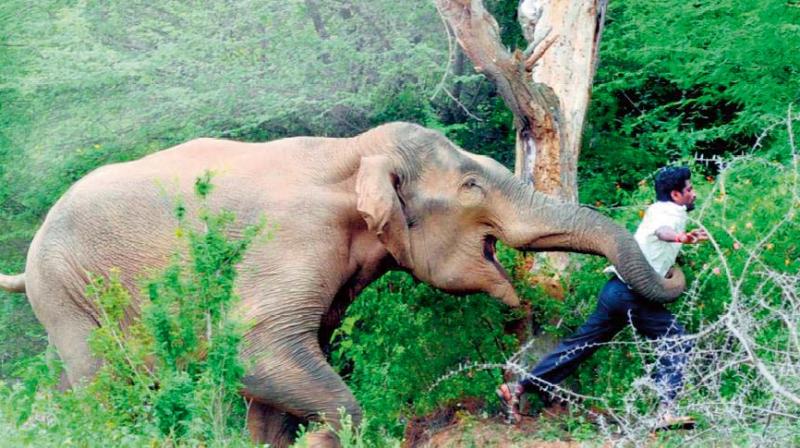
The food crisis has sharply increased conflict. In the past week alone, three people were killed and several injured in wild elephant attacks in Nagaon district. Areas like Kandoli, Kachua, Chapanala, Bharaguri, Gendhali, Barma, Bajiagaon and Kaliabor are witnessing frequent raids, with houses and crops destroyed. Though the forest department is trying to drive the herds back, efforts have largely failed. Experts warn that unless deforestation is checked and genuine habitat restoration is done, man-elephant conflict in central Assam will only worsen.
