
The Subansiri Lower Project Implementation Committee (SULPIC), representing Project Affected Families (PAFs) of the 2,000 MW Subansiri Lower Hydroelectric Project, has served a seven-day ultimatum on NHPC and announced plans to launch an indefinite bandh at the project site from June 9 if its demands remain unfulfilled.
In a memorandum submitted to the Executive Director of the Subansiri Lower Hydroelectric Project at Dollungmukh in Arunachal Pradesh’s Kamle district, the committee alleged that repeated efforts since 2009 to resolve the concerns of affected families had yielded little progress despite multiple representations and discussions with authorities.
SULPIC stated that the proposed bandh would begin at 5 am on June 9 and continue indefinitely until appropriate action is taken. The organisation claimed that all available administrative avenues had been exhausted and alleged that authorities had failed to fulfil statutory obligations, environmental safeguards and directions issued by judicial bodies.
Among its principal demands, the committee called for the immediate recognition of the Bini, Kina and Nido clans as Project Affected Families and sought the declaration of Persin Block as a Project Affected Area under the hydropower project. It also demanded that the office of the Executive Director function from Kolaptukar in accordance with an agreement signed between the Arunachal Pradesh government and the Nyishi Elite Society in 2010.
The committee further sought the cancellation of the No Objection Certificate (NOC) issued for commissioning the project, alleging non-compliance with directives of the National Green Tribunal (NGT) and observations contained in a spot verification report prepared by the Sub-Divisional Officer of Dollungmukh.
Raising environmental and rehabilitation concerns, SULPIC demanded immediate clearance of forests and standing trees within the designated submergence zone, a fresh assessment of the dam’s backflow impact, scientific disposal of muck accumulated at dumping sites and a Differential Global Positioning System (DGPS) survey of the affected areas.
In a separate representation, the organisation alleged that the original land acquisition process covering approximately 1,562.8 hectares relied largely on aerial surveys and lacked a comprehensive ground-level assessment. According to the committee, this resulted in underestimation of land holdings and inadequate compensation for many affected families.
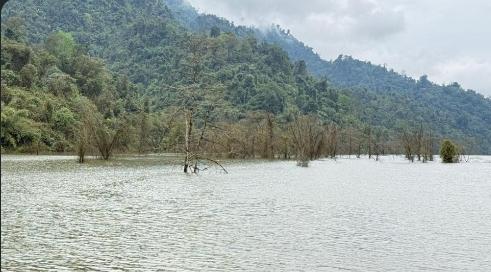
The committee also claimed that a joint field inspection conducted in April this year revealed that substantial areas had already experienced backflow and submergence even at the present dam height. It argued that any further increase in reservoir levels could expand the impact zone and affect additional landowners and settlements.
Expressing concern over environmental risks, SULPIC alleged that large stretches of vegetation and standing trees remain within the designated submergence area despite environmental conditions requiring their removal. The organisation warned that decomposing biomass in submerged areas could adversely affect water quality, aquatic ecosystems and communities dependent on the river for their livelihoods.
The committee has demanded a transparent physical re-survey of the entire submergence zone, revised compensation for newly affected landowners and immediate implementation of environmental protection measures.
Warning of further action, SULPIC said that if its concerns continue to be ignored, affected families would pursue legal remedies and democratic forms of protest at the project site. NHPC had not issued any official response to the allegations and demands at the time of filing the report.
