
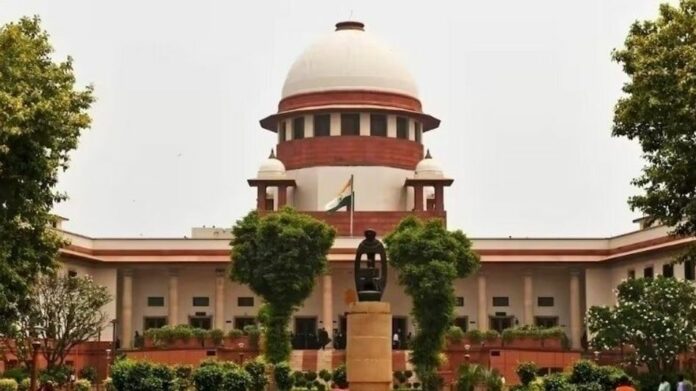
The Supreme Court on Tuesday directed the release of student protesters below the age of 18 who have no criminal records and ordered authorities to preserve all electronic and digital evidence related to the nationwide protests over the alleged NEET paper leak.
Hearing a batch of petitions alleging police excesses during the demonstrations, a bench headed by Surya Kant observed that the allegations against law enforcement prima facie warranted a fair and independent investigation. The bench, also comprising Joymalya Bagchi and V. Mohana, issued a series of interim directions.
The court instructed all states where protests were held to preserve CCTV footage, drone recordings, body-camera videos, wireless communication records, Police Control Room logs and other digital evidence connected to the demonstrations. It also directed authorities to retain any digital data collected on protesters while prohibiting its public disclosure.
The bench restrained authorities from taking coercive action against student protesters with no criminal antecedents, clarifying that the protection would not extend to individuals with criminal records. It permitted the Delhi government to continue investigations into FIRs already registered but directed that no coercive steps be taken against eligible student protesters while the matter remains pending.
The Supreme Court also sought responses from the chief secretaries of Delhi, Maharashtra, Bihar, Kerala, Madhya Pradesh and Uttar Pradesh regarding the allegations raised in the petitions.
Observing that the matter required an impartial inquiry, the bench said it would consider constituting either an independent committee or a Special Investigation Team (SIT) after receiving responses from the Centre and the concerned states.
“The allegations prima facie warrant consideration of a fair and independent probe, which must also address the concerns of families of over 200 injured police personnel,” the Chief Justice observed during the hearing.
The bench questioned why an independent investigation should not examine allegations of police excesses, stating that anyone found to have exceeded their authority or taken the law into their own hands must be held accountable.
The court also indicated that an SIT might be necessary to ensure a fair, transparent and comprehensive investigation into all incidents of violence during the protests. It said the inquiry should examine allegations against the police as well as attacks on around 250 police personnel and determine whether those responsible were students or outside elements.
Appearing for the Centre, Tushar Mehta submitted that students would not ordinarily resort to violence against police personnel and alleged that individuals with criminal backgrounds had infiltrated the protests and were responsible for violent incidents.
During the previous hearing on Monday, the Supreme Court had reiterated that the right to peaceful protest is constitutionally protected and observed that public demonstrations cannot justify police excesses or the use of lathi charges.
The protests intensified after demonstrators marched towards Parliament in Delhi on July 20, demanding the resignation of former Union Education Minister Dharmendra Pradhan over the alleged irregularities and paper leak in the NEET examination. The march culminated in clashes between protesters and security personnel, who used lathis and tear gas to disperse the crowd.
