
International, Feb 11: More than half of Bangladesh’s polling stations have been categorised as risk-prone ahead of the upcoming general elections, prompting authorities to introduce sweeping security measures across the country. Officials have announced enhanced surveillance, widespread installation of CCTV cameras and the deployment of body-worn cameras for police personnel in a bid to ensure a peaceful voting process.
According to the Election Commission, close to 90 per cent of polling centres nationwide will be monitored through CCTV coverage, making this the most technology-driven election in Bangladesh’s history. In the capital, Dhaka, police officers stationed at sensitive locations will wear body cameras for the first time during a national poll. Election Commissioner Abul Fazal Mohammad Sanaullah stated that security arrangements have been designed following detailed risk assessments and evaluations of local sensitivities. He said deployments were being carried out in line with these assessments and expressed confidence that law enforcement agencies would be able to maintain stability during and after polling. Comparing the current environment to previous elections, he remarked that authorities are in a stronger position to manage the situation.
The heightened alert follows disclosures by Inspector General of Police Baharul Alam, who said nearly 24,000 of the country’s approximately 43,000 polling centres have been classified as either high or moderate risk. In Dhaka alone, police data shows that 1,614 out of 2,131 polling stations have been identified as vulnerable. However, the army offered a contrasting perspective in an earlier briefing, stating that only two polling centres in Dhaka city were deemed risky.
Officials confirmed that the election will witness the largest deployment of law enforcement personnel in the country’s history, alongside the most extensive use of surveillance technology in any Bangladeshi electoral exercise. The scale of preparation underscores the significance of the polls, which are being conducted simultaneously with a referendum on an 84-point reform package.
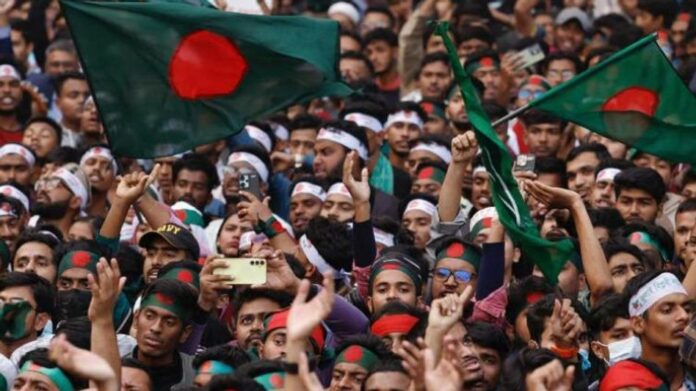
Election Commission figures indicate that first-time voters make up about 3.58 per cent of the 127.7 million-strong electorate. The main electoral contest is between the Bangladesh Nationalist Party (BNP) and its former ally Jamaat-e-Islami. The Awami League, led by former prime minister Sheikh Hasina, is not in the fray after it was disbanded by the interim administration headed by Chief Adviser Muhammad Yunus last year. Hasina’s government had been removed following the student-led “July Uprising” on August 5, 2024.
Recent pre-election surveys conducted by consulting firms, research groups and think tanks suggest that the BNP is currently ahead in the race, with its chairman Tarique Rahman widely viewed as the leading contender for the prime minister’s office.
