
Pranjal Baruah
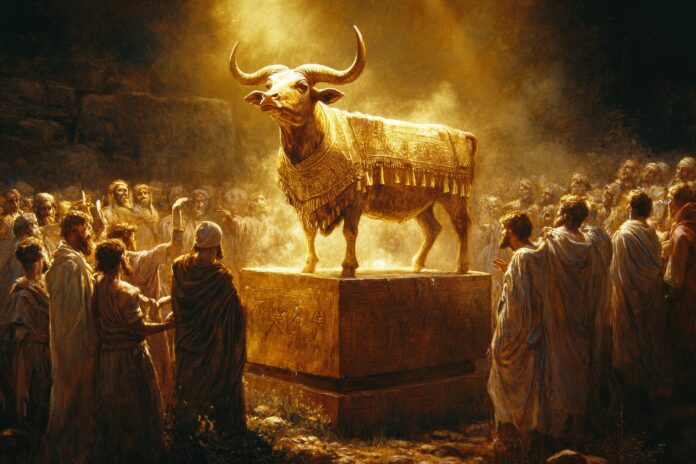
We have all stood in those shoes. You pour your heart, soul, and intellect into a project, working righteously and delivering exceptional results, only to watch the promotion go to someone else, or the award handed to a candidate who barely scratched the surface. In our frustration, we blame God, we blame the judges, we blame the government, or we blame the system. It happens to me, it happens to you, and it happens to almost everyone who strives for true excellence. Seeking to understand this deep human irony, I recently looked past the usual barrage of emotional counselling and motivational clichés that tell us to simply change tactics or set new goals. Instead, I looked at the grandest stage of human success and failure, World War II. What I discovered led me to a concept I call Glorifying False Gods. In the narrative of this terrible event, the names humanity has elevated to larger-than-life status are often only fractionally impactful compared to the true architects of our modern world order. I will not repeat the names of those the world has already over glorified. My goal is to show that whether or not your work is celebrated by others, you must keep your spirit high and continue to achieve extraordinary feats until your last breath.
Before unmasking the true giants of that conflict, the raw statistics demand our attention. Out of about 25 million military deaths in World War II, nearly 20 million came from the Soviet Union and Asia. The Soviet Red Army lost roughly 10 million soldiers. On the Asian mainland, China lost 4 million soldiers, Japan lost 2.3 million, while India, the Philippines, and other Asian nations combined lost nearly another 2 million. Furthermore, out of every five German soldiers killed in the entire war, four were killed by the Soviet Red Army. Yet, consider what popular culture teaches us. We all know about the iconic D-Day landings at Normandy on June 6, 1944. We know the names of the Western politicians, generals, and field marshals from nations like the United States, the United Kingdom, France, and Canada. We praise them for a three-month campaign that penetrated 150 to 200 miles from a 50 Mile beach front. But how many of us were ever taught about what happened just two weeks later on the other side of Europe? On June 22, 1944, the Soviet Red Army launched Operation Bagration. By August 19, across a massive 600-mile front, they completely smashed the German lines, liberated Soviet soil, and swept through Poland.
The primary architect of this decisive hammer blow was Marshal Georgy Zhukov. His actions guaranteed the fall of Nazi Germany. Yet, just like the most deserving employee in a modern office who is passed over for an award, the average person today knows little about him. The aftermath of the war presents a striking irony. Winston Churchill, who played an undeniably visionary role for Britain, was promptly defeated in the postwar elections. Marshal Zhukov ended the war as a global celebrity, accepting Germany’s surrender in Berlin and leading the Victory Parade in Moscow riding a white stallion. But his popularity became his curse. In a rigid hierarchy, being more loved and respected than the absolute ruler is a hazardous position. Driven by paranoia, Joseph Stalin stripped Zhukov of his commands, accused him of false crimes, and exiled him to remote districts. Though Zhukov made a dramatic political comeback after Stalin’s death, he was ultimately betrayed again and forced into a sudden, quiet retirement. The system simply could not tolerate a man of his stature. This historical mirror reflects a bitter truth about our professional and personal lives today. The most efficient, capable, and deserving person is almost always viewed as an existential threat by the people surrounding them, and especially by their superiors.
The world routinely chooses to praise false gods because celebrating the true ones exposes the mediocrity of the system. Unworthy leaders and fragile hierarchies will always marginalize genuine excellence to protect their own existence. But the lesson Zhukov leaves behind is not one of despair; it is one of resilience. The system may deny you the trophy, the title, or the applause, but it can never take away the fact that you were the one who moved the mountains. Let the world worship its false idols. Keep your spirit unbroken, anchor yourself in your capability, and let the sheer quality of your work remain your ultimate victory.
(This writing is a Ashoka Fellow. Mobile number: 9854003003)
