
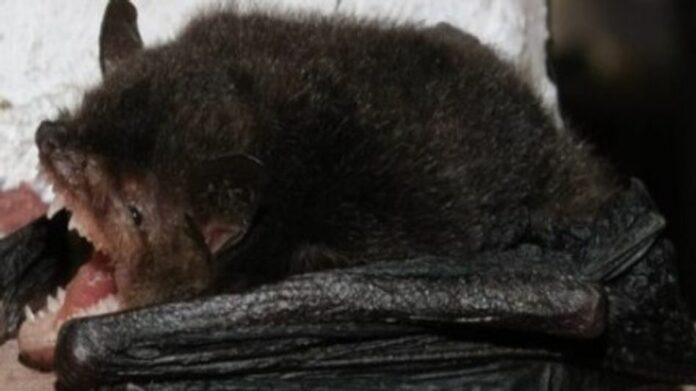
A team of Indian and Hungarian researchers has recorded two bat species in India for the first time during biodiversity surveys in Mizoram, increasing the country’s known bat diversity to at least 138 species.
The study, led by researchers from the Zoological Survey of India (ZSI), Shillong, in collaboration with scientists from other Indian institutions and the Hungarian Natural History Museum, documented the first Indian records of the Indo-Chinese thick-thumbed bat (Glischropus bucephalus) and the Indo-Chinese mouse-eared bat (Myotis indochinensis).
Published in the journal Animal Taxonomy and Ecology, the study extends the known distribution of both species from Southeast Asia into South Asia and highlights the biodiversity significance of Northeast India’s forests.
The discoveries were made during field surveys conducted across Mizoram between 2023 and 2025. Researchers confirmed the species through detailed morphological examinations, molecular genetic analyses and echolocation studies.
According to the study, Glischropus bucephalus, previously known only from Cambodia, Vietnam, Thailand and Myanmar, was recorded in Serchhip district, extending its known range about 670 km westward from its earlier westernmost record in Myanmar.
Similarly, Myotis indochinensis, previously reported only from Vietnam, Laos and southern China, was discovered at Reiek in Mizoram, extending its known distribution by nearly 1,300 km westward.
The researchers also suggested that a recently published genetic sequence from Bangladesh, currently assigned to another bat species, may actually belong to Myotis indochinensis. If confirmed, the finding would indicate that the species is more widely distributed across South Asia than previously believed.
Lead researcher Uttam Saikia said Northeast India, situated at the junction of the Indian and Southeast Asian biogeographic regions, continues to reveal previously undocumented species and distribution patterns, highlighting the need for more intensive biodiversity surveys.
The study noted that the findings help address the “Wallacean Shortfall”—the lack of adequate information on the geographic distribution of species—which remains a major challenge for biodiversity conservation in ecologically rich but underexplored regions.
