
GUWAHATI, May 4: Assam is poised to enter the final phase of its electoral process, with counting of votes for 122 Assembly constituencies scheduled for Monday. The exercise marks the conclusion of a high-stakes contest between the BJP-led NDA and the Congress-led opposition alliance.
The election, held on 9 April, recorded a strong voter turnout of 85.96 per cent from an electorate of over 2.5 crore. The campaign was largely shaped by issues of identity politics, welfare delivery, and regional aspirations.
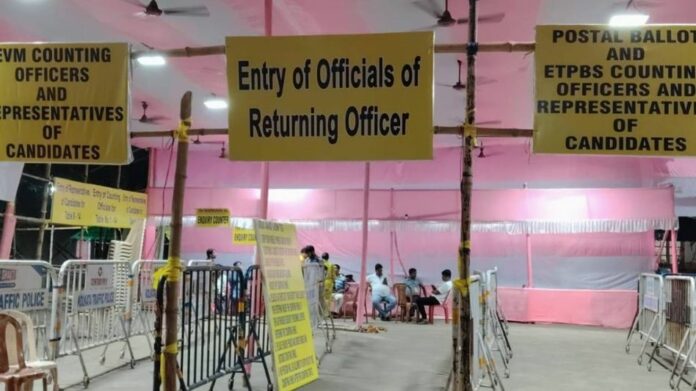
The Election Commission has set up 40 counting centres across all 35 districts, with enhanced security measures in place. Each Assembly segment will have a dedicated counting centre, while districts such as Kokrajhar, Tinsukia and Jorhat will host two centres each. A three-tier security arrangement has been deployed, led by 25 companies of the Central Armed Police Forces tasked with guarding strongrooms and overseeing the counting process. A further 100 CAPF companies are being mobilised to transport electronic voting machines from strongrooms to counting halls, while 93 companies of state armed police are already stationed across the districts. Authorities have also requisitioned 85 Assam Police Quick Action Groups to respond promptly to any untoward incidents.
Chief Electoral Officer Anurag Goel confirmed that the security grid has been further strengthened with two additional CAPF companies on standby in each district. Officials emphasised that the integrity of EVMs and the counting process remains a top priority under stringent surveillance protocols.
A total of 772 candidates are contesting, with the Congress fielding the highest number at 99, followed by the BJP with 90. The AIUDF has put up 30 candidates, while the NDA’s regional allies — the Asom Gana Parishad and the United People’s Party Liberal — are contesting 26 and 18 seats respectively. Other parties in the NDA fold include the Bodoland People’s Front with 12 candidates and the Aam Aadmi Party with 18.
On the opposition side, the Congress is contesting 65 seats, the CPI(M) 15, and the CPI(ML) one, alongside smaller allies such as the Anchalik Gana Morcha and Raijor Dal. Raijor Dal chief Akhil Gogoi is contesting from three constituencies, underscoring the fragmented yet assertive nature of the opposition bloc.
Attention will be focused on several high-profile candidates whose electoral fortunes will shape the state’s political trajectory. Chief Minister Himanta Biswa Sarma, contesting from Jalukbari, remains central to the NDA campaign. Senior BJP leader Ranjeet Kumar Dass, state Congress president Bhupen Kumar Borah, and opposition stalwart Debabrata Saikia are also among those whose performances are being closely watched. Other key contenders include AIUDF chief Badruddin Ajmal, AGP president Atul Bora, and UPPL’s Pramod Boro.
The ruling NDA coalition in Assam comprises the BJP, AGP, UPPL, and the BPF, while the opposition alliance includes the Congress, Raijor Dal, CPI(M), CPI(ML), and regional outfits. In the outgoing Assembly, the NDA held a comfortable majority, with the BJP accounting for the largest share, followed by its allies.
As counting day approaches, the state administration remains on high alert to ensure a smooth and transparent process. Political observers note that the results will not only decide the next government but also indicate the evolving dynamics of regional politics in Assam.
