
Sankalpajit Saikia
sankalpasaikia006@gmail.com
The geopolitical atmosphere of West Asia once again stands at a decisive crossroads. After months of escalating tensions involving Iran, the United States, Israel, and the Iran-backed Houthi movement in the Red Sea region, signs of cautious diplomacy are beginning to emerge. Yet beneath the language of peace lies a deep architecture of distrust, strategic competition, and geopolitical bargaining that could redefine the balance of power from the Strait of Hormuz to the Indian Ocean. Recent developments indicate that informal preparations for a possible Iran–United States understanding are underway. Reports suggest that discussions concerning the Houthis and maritime security in the Red Sea have intensified through diplomatic channels involving regional and international mediators. Although no comprehensive agreement has officially materialized, the reduction of attacks in the Red Sea has generated hopes that the region may temporarily step back from the brink of a wider war. At the center of the negotiations stands the strategic question of maritime dominance. Former U.S. President Donald Trump reportedly demanded stronger international oversight over the Strait of Hormuz — the world’s most crucial energy chokepoint through which nearly one-fifth of global oil trade passes. Iran, however, categorically rejected any proposal that would undermine its sovereign authority over the waterway. Tehran clarified that while the Strait of Hormuz must remain open for international commerce and navigation, control over the region cannot be separated from Iranian sovereignty and regional realities.
Iranian Foreign Ministry spokesperson Ismail Baghaei emphasized that the ongoing diplomatic discussions are aimed solely at ending hostilities and preventing further destabilization. According to Iranian media outlet Tasnim News Agency, Tehran also appreciated Pakistan’s quiet but significant mediation efforts between Iran and the United States. Iranian officials confirmed that a Pakistani diplomatic delegation is currently present in Tehran to facilitate continued dialogue between the two adversaries. Tehran has reportedly submitted a fourteen-point proposal designed to establish the foundations for a ceasefire and long-term regional stability. However, Iran simultaneously accused Washington of introducing what it described as “inhumane” and “unjust” conditions during negotiations. Iranian officials further warned that the United States has no legitimate territorial relationship with the Strait of Hormuz and therefore cannot dictate its geopolitical administration.
The strategic significance of the Strait of Hormuz cannot be overstated. Situated between Iran and Oman, the narrow maritime corridor functions as the principal artery of global energy transportation. Any instability in the region immediately affects international oil prices, shipping insurance costs, supply chains, and global financial confidence. Europe, East Asia, and several developing economies remain deeply dependent on uninterrupted energy transit through the Gulf. Meanwhile, the Houthi question remains one of the most sensitive dimensions of the crisis. Western governments continue to accuse Iran of supporting the Houthis militarily and financially, particularly in attacks targeting commercial vessels linked to Western and Israeli interests. Tehran, however, insists that the Houthis act independently within the context of Yemen’s domestic struggle, despite acknowledging ideological solidarity with the movement. Earlier tensions had brought the region dangerously close to military escalation. Israeli Prime Minister Benjamin Netanyahu had warned that Israel was prepared to act unilaterally against Iran if necessary. American strategic circles also debated direct military options following repeated attacks in the Red Sea. Nevertheless, diplomatic caution appears to have temporarily prevailed over confrontation. The current geopolitical moment also highlights the emergence of middle-power diplomacy. Pakistan, several Gulf states, and regional mediators have attempted to prevent the transformation of maritime tensions into a full-scale regional war. Islamabad’s mediation efforts, in particular, have received cautious acknowledgment from Tehran, demonstrating how secondary regional actors are increasingly shaping major geopolitical outcomes.
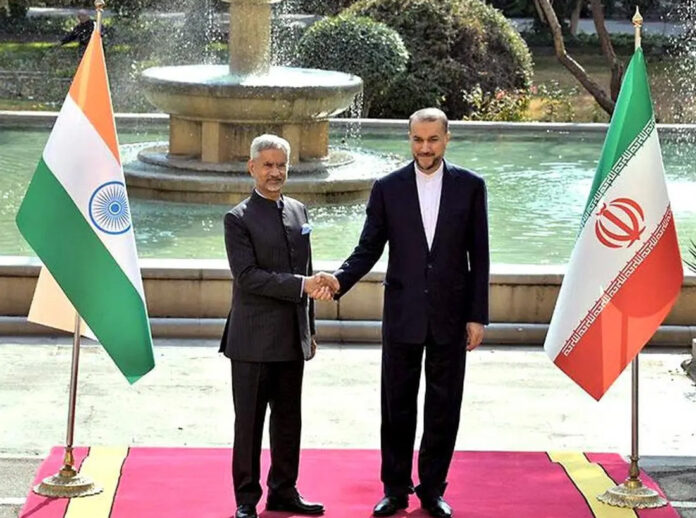
Simultaneously, another important diplomatic theatre unfolded in New Delhi. India’s External Affairs Minister S. Jaishankar held strategic discussions with U.S. Secretary of State Marco Rubio amid the ongoing West Asian tensions. The meeting reflected not merely bilateral engagement but also the broader strategic realignment taking shape in an increasingly multipolar world. During the discussions, Jaishankar reportedly hinted that the world could soon receive “happy news” regarding the Iran–United States hostility. Though diplomatic details remain undisclosed, the statement reinforced growing speculation that backchannel negotiations may be advancing toward a temporary understanding. Marco Rubio also emphasized that India and the United States are no longer merely cooperative partners but strategic stakeholders connected through shared geopolitical interests and strategic autonomy. On behalf of former President Donald Trump, Rubio extended an invitation to Indian Prime Minister Narendra Modi for a future visit to the White House, underscoring Washington’s continued prioritization of India within its Indo-Pacific and global strategic framework. For India, the evolving Iran–US situation carries enormous implications. India maintains deep energy, connectivity, and civilizational ties with Iran while simultaneously strengthening strategic cooperation with the United States. New Delhi therefore faces the delicate challenge of balancing strategic partnerships without becoming entangled in regional polarization. Stability in the Strait of Hormuz remains directly linked to India’s energy security, trade routes, and broader economic interests. The present crisis ultimately reflects a larger transformation in global politics. Military deterrence, economic interdependence, regional mediation, and strategic autonomy are now operating simultaneously within the same geopolitical framework. The Iran–US rivalry is no longer confined to bilateral hostility; it has become a test case for the future of diplomacy in an era defined by fragmented power structures and competing spheres of influence. Whether the current negotiations produce a durable peace or merely a temporary pause remains uncertain. Yet one reality is undeniable: the future stability of West Asia — and perhaps the wider international order — may depend upon whether diplomacy can finally prevail over confrontation in one of the world’s most volatile geopolitical theatres.
(Contact :9954768486)
