
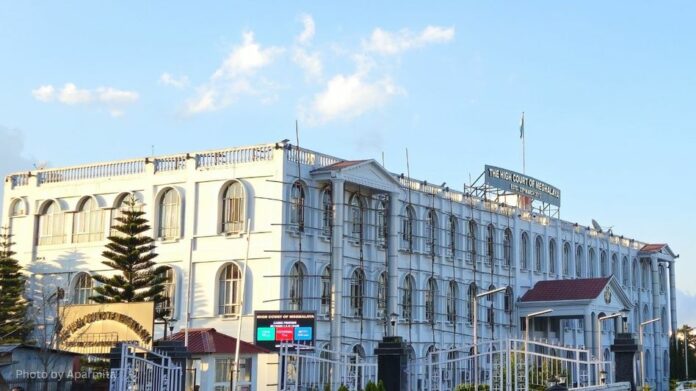
The Meghalaya High Court has dismissed a petition seeking to quash an FIR and the related criminal proceedings against four accused booked for allegedly assaulting a police officer and obstructing him from performing his official duties during a raid at a limestone quarry in East Khasi Hills.
The petition was filed by Ajit Das alias Avinash Das, Ara Kumar Hajong, Iasuklang War alias Duh and Pradip Paul, who sought to set aside Shella Police Station Case No. 09 of 2026 and the connected criminal proceedings pending before the Judicial Magistrate First Class, Sohra. The petitioners also relied on a compromise agreement reached with the complainant, a police officer.
Rejecting the plea, the High Court ruled that criminal proceedings involving allegations of obstructing a public servant from discharging official duties cannot be quashed solely because the accused and the complainant have reached a settlement. The court observed that a public servant cannot independently consent to the quashing of such proceedings when the alleged offences relate to the performance of official functions.
According to the FIR, police received information that a person suspected to be a Bangladeshi national was being assaulted at a limestone quarry. When a police team reached the site, it allegedly found a group of around 30 to 35 people attacking the victim. As officers attempted to intervene and rescue him, the accused allegedly obstructed the police, assaulted the complainant and used criminal force against him while he was carrying out his official duties.
The court noted that statements recorded during the investigation, including those of police personnel accompanying the complainant, supported the allegations. Witnesses stated that the accused pushed the officer to prevent the police from rescuing the victim.
Holding that the materials collected during the investigation disclosed a prima facie case under the relevant provisions of the Bharatiya Nyaya Sanhita, the High Court declined to interfere with the proceedings and dismissed the petition. It clarified that the trial court would decide the case independently and without being influenced by any observations made in its order.
