
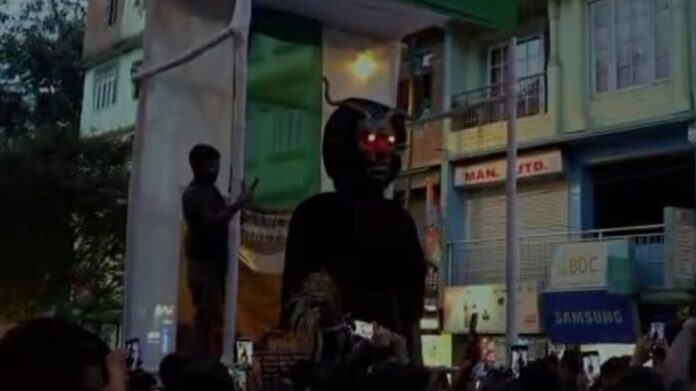
One of Sikkim’s oldest and most distinctive cultural traditions is set to return as the Namchi Rankey Mela 2026 gets underway on July 16, reviving the legendary Rankey Bhoot, a towering effigy traditionally believed to represent the evil force that destroys crops.
The two-day festival, scheduled for July 16 and 17, is expected to draw thousands of visitors from across Sikkim and neighbouring states. Organised under the theme, “Where Legacy Becomes Heritage, and Heritage Inspires the World,” the event showcases the region’s rich folklore, indigenous customs and agricultural heritage.
The Rankey Bhoot, regarded as one of Sikkim’s most iconic traditional figures, is now celebrated only in Namsum, making the mela a rare occasion to witness a centuries-old practice that has largely disappeared from other parts of the state.
For the first time, organisers have unveiled the giant effigy ahead of the main celebrations, allowing residents and tourists to view it, interact with it and take photographs before the ceremonial procession.
“The Rankey Bhoot is one of the most iconic traditional figures. You won’t find this anywhere else in India. Nowadays, it is celebrated only in Namsum,” an organiser said.
He said the advance unveiling was intended to encourage visitors to share photographs on social media and help introduce the festival to a wider audience beyond Sikkim.
The main attraction of the festival will take place on the evening of July 16, when local shamans, known as Jhankris, will lead a traditional procession through Namchi. Accompanied by music, rituals and cultural performances, the procession will conclude with the ceremonial burning of the Rankey Bhoot.
According to local belief, the effigy symbolises the destructive force that damages crops and threatens agricultural prosperity. Its ritual burning signifies the triumph over evil and is performed as a prayer for a successful harvest and a prosperous farming season.
“It is done as part of a ritual for a good harvest. According to local belief, this ghost represents the force that destroys and consumes crops. People burn the effigy with the hope that, from the next day onwards, the crops will grow well. It is a traditional myth and a ritual symbolising prayers for a prosperous harvest,” the organiser said.
Blending mythology, ritual and community participation, the Namchi Rankey Mela continues to preserve one of Sikkim’s most unique cultural traditions while introducing its enduring legacy to a broader audience.
