
Guwahati, May 19: The Rabha Hasong Autonomous Council (RHAC) has unveiled a plan to eliminate tuberculosis from areas under its jurisdiction by 2028, setting a timeline ahead of India’s national goal of becoming tuberculosis-free by 2030.
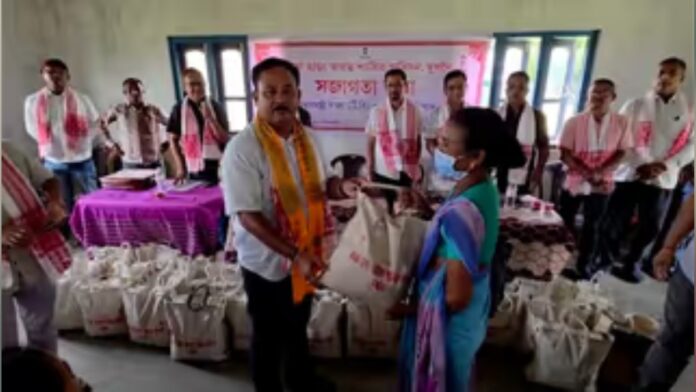
The announcement was made during an awareness programme held at Bodosa Club in Shashtapur village under the 27 No. Boko Council Constituency on Monday as part of the Prime Minister’s Tuberculosis Free Campaign. The event brought together health officials, council representatives, local residents and tuberculosis patients to promote awareness, encourage treatment adherence and strengthen nutritional support efforts.
Nearly 30 patients from the Boko TB Unit participated in the programme. Among those present were RHAC Chairman Sonaram Rabha, executive members Arjun Chetry, Sumit Rabha and Prabodh Kalita, Bodo-Kachari Welfare Autonomous Council executive member Dasharath Boro, Sub-Divisional Medical and Health Officer of Boko BPHC Dr. Dhruba Baruah, and Senior Tuberculosis Treatment Supervisor Dhrubajyoti Medhi.
As part of the initiative, tuberculosis patients received nutritional support packages containing rice, dal, mustard oil and soybean to assist in recovery and improve immunity levels. RHAC executive member Sumit Rabha said this was the first such distribution programme in the Boko constituency and added that similar support initiatives would soon be introduced in the Pantan area of Chaygaon.
During the programme, Dr. Dhruba Baruah said free medication under the National Tuberculosis Elimination Programme (NTEP) is being made available through the Boko Block Primary Health Centre. He shared official data showing that 230 tuberculosis cases were recorded in 2025, while 79 cases have already been registered in 2026. According to him, 112 patients are currently undergoing DOTS treatment, while 197 patients successfully recovered during 2025.
Senior Tuberculosis Treatment Supervisor Dhrubajyoti Medhi described the initiative as an important move towards strengthening community-based healthcare efforts. He noted that similar nutritional support activities had earlier been conducted in Bandapara and stressed the importance of public awareness, reminding residents that tuberculosis spreads through bacterial infection.
Addressing those present, Sumit Rabha said tuberculosis had once been considered a disease with limited treatment options, but advancements in healthcare have significantly improved recovery rates. He also expressed concern over increasing cancer cases in the Boko region and referred to ongoing nationwide screening efforts aimed at early detection and treatment.
RHAC health executive member Prabodh Kalita said the council’s decision to set a 2028 target demonstrates its intent to intensify public health measures ahead of the national deadline. He added that awareness campaigns and nutritional support programmes would continue as part of efforts to strengthen the fight against tuberculosis across the region.
